
If you are from the US, you’ve probably seen shows like this before…
Well, as it turns out, American Ninja Warrior is based on Ninja Warrior, a TV show that originally aired on the now-defunct channel G4, which in turn was an edited version of a long-running Japanese sports entertainment television special known as Sasuke (サスケ).
Sasuke itself began as a special of another sports entertainment program, Kinniku Banzuke (筋肉番付, lit. Muscle Ranking, which G4 then edited into Unbeatable Banzuke). The first tournament aired in 1997 and was held at Tokyo Bay NK Hall before subsequent tournaments were taped at TBS Midoriyama Studios. To date, there have been 38 tournaments, with the most recent airing on December 29, 2020. Generally, each tournament number gets suffixed to denote each tournament (ex. Sasuke 17).
How Sasuke works is that it is a four stage obstacle course of increasing difficulty where 100 competitors compete to complete all four stages. The First Stage primarily tests speed and eliminates a large majority of the competitors (usually around 85 to 90).
The Second Stage also tests speed, albeit at a more grueling pace (aside from some tournaments), but in recent years has contained obstacles that test the upper body.
The Third Stage, however, is arguably the most notorious stage: despite initially testing balance and coordination, it now tests upper body endurance (starting from Sasuke 4). While there is no time limit for the stage, competitors are allowed to use the rest areas in between most obstacles to reapply any chalk or stick spray as well as replenish stamina for a given amount of time. The notoriety of the Third Stage comes in that there have only been 39 clears as of the end of 2020, with just SIX competitors doing so more than once.
The Final Stage is a vertical stage where competitors have to scale the tower to hit the buzzer in a short amount of time, with a rope climb being the final (and for certain tournaments, the only) part of the ascent. One who completes all four stages achieves Kanzenseiha (完全制覇, lit. Complete Domination, translated as Total Victory in English broadcasts and officially known as Complete Victory in Sasuke 31), and this has been done six times by four different competitors: Akiyama Kazuhiko (秋山和彦) in Sasuke 4, Nagano Makoto (長野誠) in Sasuke 17, Urushihara Yuuji (漆原裕治) in Sasuke 24 and 27, and Morimoto Yūsuke (森本裕介) in Sasuke 31 and 38.
Anyhow, as I mentioned before, 100 competitors compete in every tournament. Each competitors is assigned a number that designates their start position to establish an order in which the competitors start (from #1 to #100). Each one gets a bib with their number on it (almost always presented in Brush Script, Sasuke 9 being an exception) for themselves to wear (although some choose not to). There also exists a system for how the show’s producers assign the numbers: usually, rookies or joke competitors are assigned low numbers while more experienced and skilled competitors are assigned the higher numbers (this can also include established celebrities, such as NAOTO of boy band EXILE or Darvish Kenji (樽美酒研二) of rock band Golden Bomber). The two most coveted numbers are #99 and #100: #99 is given to whomever the producers are the second most likely to succeed, and most often is given to an established competitor or someone who had a successful showing the previous tournament, while #100 is given to the competitor who the producers believe to be the most likely to achieve Kanzenseiha. There have been exceptions to this, although we won’t get into that too much.
As for the results of #100, it failed to clear the First Stage 16 times, the Second Stage 5 times, the Third Stage 8 times, and the Final Stage 8 times. Only one competitor that wore #100 managed to achieve Kanzenseiha. However, if this had been just over a month ago, the statistic of any competitor wearing #100 and achieving Kanzenseiha would have stood at 0.
Chapter 1: The Show’s Beginnings – The Age of Yamada and Akiyama
Anyway, I’d like to discuss the history of the competitors that wore #100. The first to wear it was then-boxer Kawashima Hiroshi (川島郭志), who failed the second obstacle of the first stage (Burasagari Maruta or Spinning Log). For the following tournament in Sasuke 2, the producers gave Massage Therapist and former Horsehair Crab trapper/fisherman Akiyama Kazuhiko the #100 due to setting the record in Kinniku Banzuke’s Quick Muscle event (keep in mind that this was when Sasuke was still a special of Kinniku Banzuke). Akiyama himself would achieve Kanzenseiha later on as noted before, although for his debut in Sasuke 2, he timed out at the final obstacle of the Second Stage (The Wall Lifting/Wall Lift).
The use of previous showing determining start position began in Sasuke 3, where comedian Ōmori Akira (大森晃) landed the #100 based on reaching the Final Stage in the previous two tournaments. He once more showed his prowess by advancing to the Final Stage once again, setting a record for consecutive Final Stage appearances that stood for 5 years. The following tournament, he landed #99, and his performance began to take a sharp dive, beginning a string of consecutive First Stage failures before taking a long hiatus from the show. Anyway, following Sasuke 3, there was someone else who wore #100 for his performance…
Yamada Katsumi (山田勝己) is without a doubt one of the show’s most famous competitors. Having failed the Second Stage in his first two showings, he then pulled this run in Sasuke 3 to come within inches of Kanzenseiha. Following the loss, the show’s producers gave him the #100, which would begin a loose string where he wore the coveted number (the exceptions being Sasuke 6 and 9). During this time, he would lose his job as a propane tank deliveryman, taking up part-time steel working while devoting himself to Sasuke training, all while building up obstacles on his own property. During this time, his results as a #100 were mixed. In Sasuke 5, he failed the Spider Walk in the Second Stage, while in Sasuke 7 and 8, he failed the First Stage. In Sasuke 10, he failed the Pipe Slider, the final obstacle of the Third Stage (I’ll get to this later). The end of this string was Sasuke 11, where he failed the Balance Tank of the Second Stage in infamous fashion.
I do wish to also bring attention to Yamada’s performances overall during this time as they built a narrative. As mentioned before, upon losing his full-time job, he began to devote more time to training. In Sasuke 6, he was given #99 as Akiyama had returned after a one tournament absence and got the #100 based on his Kanzenseiha. Yamada went the furthest of all the competitors, just barely failing the dismount of the Pipe Slider in the Third Stage (as shown above). The following tournament, he brought his family along to watch, only to fail just inches from clearing the First Stage. Based on his family’s advice, as alienation due to his training was growing, he decided to compete one last time for Sasuke 8 and vow retirement should he fail to achieve Kanzenseiha. As for how he did, he fell victim to the slippery course, as Sasuke 8 is now infamous for having been taped on the cusp of a typhoon landfall. Yamada himself failed the Warped Wall/Soritatsu Kabe, a recurring theme throughout his competitive career. In disbelief over his failure, he decided to attempt another ascent of the wall minutes after his time expired, and, to the amazement of everyone, cleared it with ease, before proceeding to advance to the buzzer. This would end his career on a rather bittersweet note… or so it seemed. Two months prior to Sasuke 9, he wrote a letter to the show’s producers saying he was ready to return, and on the day before taping, left a letter for his family, stating, “I may be unqualified as a husband or father, but I can’t give up on my dreams after all.” Given the #99 (Akiyama was given the #100), Yamada was able to clear the First Stage, although he would time out in the Second Stage. With momentum on his side, he had reason to believe he could go further, and his next showing would prove to be his most famous.
Sasuke 10 marked a difference in the bibs, as the ones given out showed #901 to #1000 to commemorate the 10th tournament. As a result, Sasuke’s most famous competitor at the time, none other than Yamada, was given the #1000. The First Stage was particularly brutal, as only five cleared. Additionally, of the final 20, usually comprised of whom the producers deem the strongest, only one made it: Yamada. On the heels of his fellow All-Stars (Akiyama being one of them), the pressure was on for Yamada to clear, and he delivered as the thousandth competitor of Sasuke. As #1000, he managed to go the distance to the Pipe Slider, farther than everyone else, where he once again had to face the dismount he failed four tournaments prior. Unfortunately, he didn’t even stick the landing only to fall off the side as he had done previously, rather he fell back in the water in a gigantic splash. The post-run interview is regarded as one of the most memorable in the show’s history, as an emotional Yamada uttered a quote for the ages: “For me, there is nothing else except Sasuke… (俺には…、SASUKEしかないんですよ)”

I guess before we continue on, I should also discuss Akiyama’s history with the #100. He wore the coveted number three times, the first time being Sasuke 2 as previously mentioned, then in Sasuke 6 and Sasuke 9. The reason he didn’t in Sasuke 5, the tournament after his Kanzenseiha, was that he was unable to compete at all as he was busy with opening his massage therapy parlor. He would shockingly fail the Jump Hang in Sasuke 6 that day as many did, opening a string of First Stage failures. This would dubiously include his Sasuke 9 appearance when his foot skimmed the water at the end of the Godantobi/Quintuple Step, the first obstacle (the worst result ever for #100). This would mark the last time he would wear the number, although his career otherwise is quite illustrious, and I’ll talk about that in a blog post in the future, as it tells a story of sheer perseverance.
Anyway, back to Yamada. As mentioned before, he failed the Balance Tank in Sasuke 11. The failure is quite dubious as he had managed to land on the tank with each leg on each side of the tank before sliding into the water. As he dried himself off, he calmly muttered something along the lines of, “…nothing much I can do about that.” That same tournament, there was someone else who managed to get to the Final Stage: fisherman Nagano Makoto.
Chapter 2: Rise of a Sasuke Legend – The Age of Nagano
Nagano himself just two tournaments prior managed to advance to the Pipe Slider only to fail the dismount, earning the #999 the next tournament (equivalent to #99 in normal tournaments), where he proceeded to fail the Jump Hang as most did. Wearing #96, he managed about 20 of the 22.5 meters before timing out. As a result, he was given his first #100 for Sasuke 12, where he proceeded to produce a memorable run.
Despite managing to advance to the Final Stage again and successfully climbing the tower, he missed hitting the buzzer by 0.11 seconds. Even as he stood at the top of the metal mountain, Nagano vowed to not look down onto the course, only doing so should he actually win. In the tournaments after, he would advance again to the Final Stage in Sasuke 13 (matching Ōmori’s record), but failed once more (this time by about 10 cm). In Sasuke 14, he failed the new Jumping Bars, an obstacle he expected himself to clear. In Sasuke 15, he shocked many by failing the modified Metal Spin in the Second Stage. In Sasuke 16, he dubiously failed the Devil Balanço/Devil’s Swing when he grabbed the pipe of the Pipe Slider, but lost his grip and the pipe slid down the track, leaving him with an impossible task of swinging to the pipe. During this span, he wore the #100 as everyone expected him to make up for his Sasuke 12 near-miss.
For Sasuke 17, Yamada once more announced he intended to retire. He hadn’t cleared the First Stage since Sasuke 12 (in fact, his Sasuke 10 run was his last to the Third), and had been plagued with rather dubious defeats in the First Stage. Out of courtesy, Nagano gave the #100 to Yamada (Nagano himself noted he looked to Yamada as an idol during his early Sasuke career). While Yamada once again failed the Warped Wall, Nagano went the distance to complete all four stages, finally avenging his losses.
As a result of Nagano’s Kanzenseiha, the course received a major overhaul, beginning what would become the Shin-Sasuke era (the previous 17 making up “Classic Sasuke” as a result). Additionally, all competitors were required to run a 1200 meter race to determine the starting position, with each competitor choosing their bib at the finish line. Nagano himself chose #96 as first place finisher Masafumi Kato grabbed #77 while second place finisher Ryouta Kume nabbed the #100. Kume failed the Pole Maze in the First Stage while Nagano once again finished farther than everyone else when he suffered a course-out on the new Shin-Cliffhanger (he would point this out to producers and disqualified himself).
Starting with Sasuke 19, Nagano wore the #100 for six consecutive tournaments with varied success. In Sasuke 19, he shocked many by failing the First Stage’s Flying Chute (to be fair, the obstacle had been modified to be absurdly difficult, and the tournament itself is infamous in that only two cleared the First Stage only for both to fail the Second). For Sasuke 20 (where he wore #2000 as the two-thousandth competitor of Sasuke), he failed the Downhill Jump in the Second Stage after losing his balance. In Sasuke 21, a malfunction of the Gliding Ring caused the eponymous ring to be sticky and difficult to slide down the track, leaving Nagano with another impossible task of gaining enough momentum to try and jump for the landing pad. For Sasuke 22, he failed the new Slider Jump in the First Stage. This is where we also introduce the next notable competitor to wear #100.
Chapter 3: The New Era – The Age of Urushihara

Sasuke 22 was notable in that the All-Stars (comprised of Nagano, Yamada, Akiyama, Takeda, Yamamoto, and Shiratori, the latter two whom I will cover in later posts), a group of competitors that the producers deemed the most likely to achieve Kanzenseiha during the Classic Sasuke era, had failed to clear the First Stage, although unlike Sasuke 19, there were some new faces that managed to advance to the Second and Third Stages, as well as one who made it to the Final: Urushihara Yuuji. The proprietor of Haruta Shoes, Urushihara is part of a group of five known as the Unlimited Cliffers, a group of Sasuke fans who met and trained at the now-defunct Muscle Park (a small Sasuke replica at Odaiba, Tokyo) and managed to earn a spot in Sasuke 21 thanks to passing the trials, although he failed the Flying Chute and his run was cut from the official broadcast. In Sasuke 22, however, his continued training pulled off when he did the unthinkable by clearing the Third Stage in his debut and advanced to the Final before timing out just inches from the buzzer.
For his showing, he earned the #99 for Sasuke 23, while Nagano continued to wear the #100. Before his run, Urushihara went to Nagano noting that he was feeling the pressure, to which Nagano responded that he should try wearing the #100, jokingly stating that it was difficult/painful. Urushihara would hold up and clear the First Stage, but unexpectedly failed the new Unstable Bridge in the Second when he failed to dismount cleanly. Nagano, on the other hand, turned in a memorable performance by advancing to the Final.
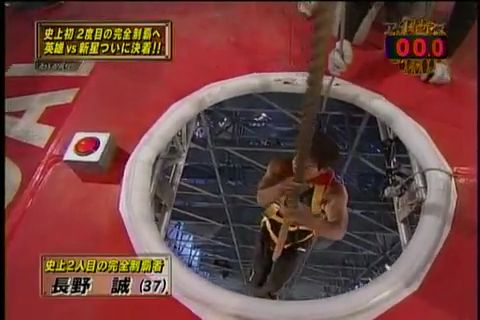
Unfortunately, much like his Sasuke 12 near-miss, Nagano missed the buzzer by inches. What would be notable about this was that the time limit for the Final Stage had been reduced by five seconds, meaning Nagano COULD have achieved Kanzenseiha for an unthinkable second time. Nevertheless, he would once again wear the #100 the following tournament, while Urushihara wore the #93, as Kanno Hitoshi managed the #99 by reaching the Final much like Urushihara did previously (Kanno himself wore #96 in Sasuke 23 thanks to reaching the Spider Flip in Sasuke 22 before going off-course).
Sasuke 24 represented a big of the changing of the guard. Urushihara managed to achieve Kanzenseiha to avenge his near-miss two tournaments prior. Additionally, four others managed to reach the Final with him, although none cleared, and none of them were All-Stars. Kanno himself was surprisingly not amongst them, having timed out on the First Stage as many others had. Nagano himself saw many of his fellow competitors timing out, and therefore rushed through the First Stage in an attempt to get ahead of the clock. However, on the Jumping Spider, after managing to stick himself to the walls (the insanely difficult challenge of the obstacle), he rushed through the Spider Walk portion and was too low to land, thereby plummeting into the water to the shock of everyone.
For the following tournament, the first 97 placements were drawn by lottery, while the final three were given to those who had achieved Kanzenseiha: Akiyama #98, Nagano #99, and Urushihara #100. These three had rather poor results: Akiyama, who had only made sporadic appearances since his semi-retirement after Sasuke 17, failed the Warped Wall (which had increased height since Sasuke 17). Nagano failed to get a clean jump off the springboard of the Circle Slider, which had been brought back, dubiously failing an obstacle he cleared in his Kanzenseiha run. Then came Urushihara…
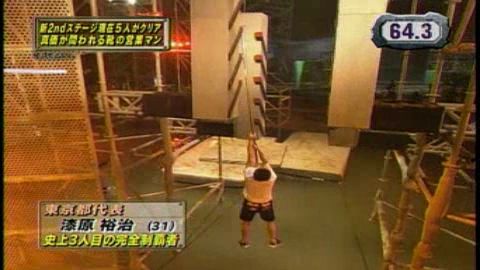
Urushihara himself managed to clear the First Stage, but failed the Double Salmon Ladder in rather awkward fashion in a way thought impossible: Urushihara did not get a clean jump from the first ladder to the second, but the one of the stoppers on the bar that had been added in Sasuke 21 still managed to catch a rung, leaving him hanging and rendering the obstacle impossible to complete.
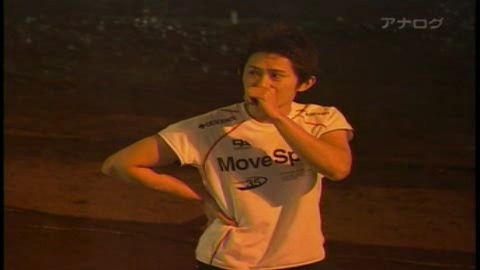
Without much momentum, Sasuke 26 began with Nagano once again at #99 and Urushihara at #100. This time, however, both failed the First: Nagano failed to stick to the walls of the Jumping Spider after the jump while Urushihara failed the Halfpipe Attack (he also had a rather sloppy run overall). Additionally, the show was at this time at risk of getting cancelled, leaving the future rather uncertain.
One thing to know about Urushihara is that he is noticeably humble to a fault, almost, and will usually try to shy away from the limelight. Perhaps the pressure of wearing #100 got to him, as he switched to #99 for Sasuke 27 while Nagano took the #100 mantle again. Both turned in impressive results. Nagano advanced to the Ultimate Cliffhanger, failing the transition to the fifth ledge, while Urushihara achieved Kanzenseiha for an incredible second time. After the tournament’s completion, Sasuke went dark as cancellation seemed imminent, until TBS took over production to begin the new Rising era.
Part of the ushering of the new era was a seeming forced retirement of the All-Stars. Of the six All-Stars, the oft-injured Shiratori (who hadn’t competed since Sasuke 21) was unable to return, leaving Akiyama, Takeda, Yamamoto, Yamada, and Nagano to compete, and the producers gave these five the last five numbers, in that order. All five failed to clear the First Stage, with Nagano going the furthest when he failed the second of the now two Warped Walls. Urushihara himself still competed, where he wore #88, a sacred number in Japanese culture. Urushihara managed to advance to the new Crazy Cliffhanger, but he failed the transition to the final ledge, failing the Third Stage for the first time (this is shown in one of the videos above).
However, this forced-retirement of the All-Stars wound up being short-lived. While Akiyama and Yamada stayed to their decisions of retirement (the latter this time truly sticking to it aside from “ceremonial” appearances in Sasuke 33 and 38), Yamamoto, Takeda, and Nagano continued to compete. For Sasuke 29, Urushihara cleared the First Stage but failed the Backstream in the Second due to fatigue. Nagano, however failed the second of the two Warped Walls again, although this time, it was due to injuring his hamstring from the Long Jump. While the results for these two were a bit lackluster, there was one competitor who went the distance.
Chapter 4: The Prodigy – The Age of Morimoto
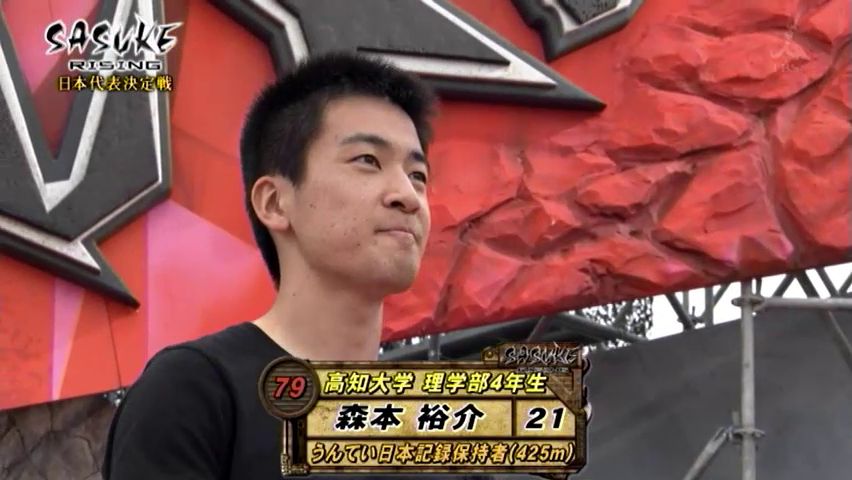
Then a relatively young competitor at 21, Morimoto Yūsuke snuck his way to the Third Stage and managed to clear the Crazy Cliffhanger, being the first to do so. Prior to this, he had competed a few times before (his debut being Sasuke 18), although he only managed to clear once (in Sasuke 27, nonetheless). His run would end at the Pipe Slider, but due to his performance, he’d earn the #100 for Sasuke 30. However, if you remember how Sasuke 10 and 20 went, you’d know that the bibs were a bit different. Thus, Morimoto was ACTUALLY given #3000, making him the three-thousandth competitor in Sasuke history.
For Sasuke 30, Morimoto managed to clear the First stage, but failed the Wall Lifting/Wall Lift in the Second. Nagano managed to avenge his First Stage failures by advancing to the Swap Salmon Ladder (where he got eliminated by the infamous disqualification condition for the obstacle). Urushihara would also avenge his Backstream failure only to time up at the Wall Lifting/Wall Lift. Interestingly, Matachi Ryō (also an Unlimited Cliffer) would be the one to go the furthest. Matachi himself had also managed to advance to the Final Stage prior in Sasuke 27, and he managed to once more impress as he came within a meter of Kanzenseiha. Matachi would proceed to wear #100 in the following tournament, but timed out on the Warped Wall. Nagano himself also timed out at the same obstacle, and begrudgingly stated in his post-run interview that he had gotten tired of competing and that it would likely be the last anyone would see of him competing, to which producers pleaded with him afterward to consider one last run. Urushihara himself would fall victim to the wall, and stated after his run that it was the first time that Kanzenseiha seemed that far to him. This then begs the question of how Morimoto did.
Morimoto wound up with #91, and he turned in a run for the ages. He would avenge his Second Stage failure as well as the demons from failing the Pipe Slider to advance to the Final, the only competitor to do so. Then, in his first ever ascent of the tower, he wowed everyone by hitting the buzzer to achieve Kanzenseiha. Sasuke now had a fourth competitor to conquer all four stages.
Unfortunately, the momentum the Rising era had seemed to grind to a halt when Morimoto declared he would be unable to compete in Sasuke 32 due to university work. On the other hand, Nagano declared he would compete for one last time, and the producers gave him the #100 one last time. His run ended on a bittersweet note where he came just meters short of the buzzer for the First Stage. While he was given a retirement ceremony, much of it was cut from broadcast, with only a few tidbits shown at the very end after the final run of the Third Stage to the ire of many. A majority of fans would regard these factors contributing to sentiments that Sasuke 32 began a true low point in the show’s history, and many fans began to stop watching the show following this tournament or the next few after.
Morimoto would inevitably return in Sasuke 33 and continued to wear #100 every tournament afterwards. In his first tournament back, he failed the Flying Bar in the Third Stage to the shock of many. In Sasuke 34, he managed to advance to the Vertical Limit before his strength gave out. His next two runs were remarkable as he managed to return to the Final Stage, the first to do so since his own Kanzenseiha, but could not finish either time. Sasuke 36 was notable in that the Final was to be filmed live from Yokohama Red Brick Warehouse, and Morimoto got to show his stuff in front of millions, and despite improving on his showing from the previous tournament, was 0.5 seconds late. The response was a lackluster showing in Sasuke 37 when he failed the Warped Wall.
As for Urushihara and Matachi, their performances were mixed. Matachi had a string of First Stage failures until Sasuke 36 when he returned to the Third once more. Urushihara, on the other hand, had vowed to retire to Sasuke 34 should he fail the First, but manage to rebound and advance to the Second Stage again, and would later reach the Third in Sasuke 36 and 37 despite a hiccup on the Warped Wall in Sasuke 35. While they didn’t manage to break it into the Final, their potential still showed.
By this point, you’ve probably realized that through the first 37 tournaments, a time period spanning over 20 years, no one wearing #100 managed to achieve Kanzenseiha. There were those who came close, but it still had yet to be done. It was almost as if the number itself, the one representing the most likely to succeed, was cursed. Who would be the one to break it?
One thing to note is that most often, Sasuke aired twice a year prior to the Rising era, which gradually shifted to just once a year (2017 and 2018 being the exceptions as this was when Sasuke 33 to 36 aired). Sasuke 36 and 37 aired on New Year’s Eve of 2018 and 2019, respectively, in order to coincide with New Year’s Eve programming and to allow Final Stage competitors the chance to achieve Kanzenseiha live as mentioned before. As you all should know, 2020 was the year of the COVID-19 pandemic, and it begged the question on whether or not Sasuke could even tape its 38th tournament. Producers were eventually able to begin production, with the taping taking place from October 31st to November 2nd with many protocols to ensure the safety of the competitors, with the course being constantly disinfected and sanitized (this would also include the muddy water) as well as competitors being tested on-site. Additionally, no foreign competitors were invited due to travel restrictions, preventing previous finalist René Casselly from returning.
With a bare-bones cast of competitors, Nagano decided to return despite vowing to only return for Sasuke 40, stating that he wished to cheer up the Japanese public during the trying times. This also convinced Yamada to also return for a ceremonial run, having done so previously for Sasuke 33 (the show’s 20th anniversary). In fact, there were quite a few notable returnees, including Takeda (who had taken a hiatus due to his injury from Sasuke 36) and Ōmori (who, as mentioned before, took a long hiatus from his appearance from Sasuke 7 to his next for Sasuke 23 and 24 before disappearing again).
Now if you’ve really been paying attention, you know that I stated that Morimoto won twice: Sasuke 31 and Sasuke 38. You might be able to put two and two together that it was Morimoto who wore the #100 to Kanzenseiha in Sasuke 38. Indeed, that was the case: with everything on the line, and with everyone having failed before him, Morimoto gave it his 100% and turned in something that will become legend.
Morimoto’s run is one for the ages, and one that I think will be regarded as the best ever: Morimoto avenged his loss at the Warped Wall, then proceeded to brutalize the Second Stage where over half the remaining competitors failed. Then, as everyone before him had fell to the muddy waters below, Morimoto consulted with Nagano, understanding the pressure he had as #100. What would happen afterwards was the avenging of his fallen comrades by advancing to the Final Stage. Deadset on overcoming his heartbreaking losses, he managed to make it to the top of the mountain to the joy of everyone, thereby making him the second ever to achieve Kanzenseiha twice. Whatever curse there was on the #100 had been smashed to bits. If his performances are any indicator, Morimoto won’t be slowing down anytime soon, and it’s very likely he can go the distance again, and the producers will likely give him #100 as long as his prowess holds much like Nagano had before.
This is where the history of Sasuke’s #100 stands. It might seem like the book could end here, but with Morimoto representing the future, I think the legend will continue on, and hopefully this new chapter will be as illustrious as the first one was.
 The Hiro's Blog