Cooking has become something I’ve come to really appreciate and enjoy over the last year or so. My mother has been the family cook and was often the one to prepare food for the table. My father would also help on some occasions and was the family’s resident meat grilling expert. My brother also took up cooking while in college thanks to religiously following Gordon Ramsay at the time, and I wound up being the last in the family to start up cooking not only as a hobby, but also as a loose way of life.
When my parents left for Taiwan last January, it was to be routine. They had always gone back for Chinese New Year and would return sometime during the spring. However, we all know what happened a couple months later and they’ve been stuck overseas while I’ve been looking out for myself here in Boston. What I meant by saying that cooking was “a loose way of life” is that I had to effectively learn how to cook more than the few dishes that I knew at the time. I couldn’t just keep ordering food or go to get take out or delivery: I had to learn how to fend for myself and provide something for myself to eat.
Luckily for me, I had learned some things from my mother and knew a few ins-and-outs of picking groceries. Over the last few years I’ve always enjoyed a trip to the supermarket and just exploring the various items that I might find at every place I go. My go-to place is the H-Mart in Cambridge thanks to the plethora of Asian goods that they provide along with the quality of the products.
I’ve mentioned my mother numerous times as you might have noticed, because I feel I attribute my interest in cooking from her. She learned much of her cooking repertoire from her mother and my grandma on my dad’s side, but she continued to learn new recipes from our family friends in order to share them with us, as well as taking cooking classes abroad. In October 2014, she flew to Florence for a month to learn some Italian cooking, and then to Kyoto in October 2017 to learn additional Japanese dishes.
In terms of recipes I knew prior, I knew of how to cook a Japanese dish known as “Oyakodon (親子丼)” as my mother had sent my brother and I the recipe she got from Kyoto. I began to try it out and have been continually refining it, to the point where I wrote down my own version of the recipe.
The thing with Oyakodon that I particularly enjoy aside from the flavor is the poetic nature of its name. The primary ingredients of the dish aside from the rice are the chicken and egg. “Oyako (親子)” refers to “parent” and “child”, which is an analogy to the chicken and egg present in the dish. The dish was first served at the restaurant Tamahide (玉ひで) which remains open today in Tokyo.
There is, however, a loose variation of oyakodon that features one difference in the protein: “Katsudon (カツ丼)”. The difference is that instead of chicken, the dish uses a deep-fried pork cutlet, referred to as “tonkatsu (豚カツ)”. Sometimes, a deep-fried chicken cutlet is used. Regardless, the dish is popular among the youth in Japan, and it has become somewhat of a tradition to eat the dish prior to a major test or entrance exam due to “katsu” being a homophone for the verb “katsu (勝つ)”, which means “to win”.
Anyway, I’d like to get to how I cook the two dishes because the process is very similar.
Recipe for Oyakodon and Katsudon
Ingredients: 0.5 cup of dashi (出汁/だし) 1.5 tsp of soy sauce 1.5 tsp of light-colored soy sauce (NOTE: there is a difference) 1 tbsp of mirin (味醂/みりん) 1.25 tsp of sugar Dash of salt (up to .25 tsp) ~0.25 onion or ~1 shallot, chopped into thin slices 2 eggs 1 medium bowl of rice Ingredients specific to Oyakodon 1 Chicken Thigh Ground pepper (for garnish, optional) Touch of mitsuba (for garnish, optional)
Ingredients specific to Katsudon 1 Pork or Chicken Cutlet 2-2.5 tsp flour 2.5-3 tbsp panko (Japanese bread crumbs) 1 stalk of scallion, minced (for garnish, optional) Note: Amounts vary based on size of cutlet
Note: “a” denotes a step for Oyakodon, “b” for Katsudon
0a) If going for Oyakodon, chop the chicken into thin slices and/or bite-size pieces.
0b) If going for Katsudon, flatten the cutlet with a meat hammer, then coat it with the flour. Afterwards, beat one of the eggs and have it coat the cutlet (IMPORTANT: save whatever remains of the beaten egg!). Next, coat the cutlet in the panko. Afterwards, you may choose to either deep-fry or pan-fry the pork cutlet. Once cooked, cut the cutlet into pieces, but do not cut all the way through in order to maintain shape for later.
1) Over low-medium heat in a small or medium skillet, combine the dashi, soy sauces, sugar, and salt, and bring to a simmer.
2) Add the onions and reduce to the lowest heat setting. Cook the onions until they are soft and have absorbed the broth.
3a) Add the chicken, turning pieces periodically to ensure all are properly cooked.
3b) Place the cutlet with the side you cut into away from the skillet. Then, pour the beaten egg from before onto the cutlet.
4a) Beat one of the eggs and add to the skillet, distributing the mixture evenly.
4b) Flip the cutlet, then beat another egg and pour onto the cutlet.
5a) Shut off heat, then add the other egg, also beaten.
5b) Flip the cutlet once more and shut off heat.
6) After about 30 seconds, “move” the ingredients onto the bowl of rice, making sure to distribute the ingredients properly and maintaining the shape from the skillet. At this point, you may choose to add the optional garnish. Otherwise, your dish is ready to serve!
I have an interesting history with the hack. I first saw CarlSagan42’s playthrough of it (Part 1 and Part 2) and was enticed by the puzzle aspect in addition to its soundtrack. I had seen Carl play through plenty of puzzles in Mario Maker 1 (which served as a more formal introduction to the Kaizo community), so seeing him play an SMW hack was certainly an interesting shake-up.
Recently I’ve been watching a lot of Twitch streams and interestingly enough my favorite streamer LaserBelch also decided to play it despite himself acknowledging that puzzles aren’t his forte. Indeed, he spent 2 hours trying an impossible trick in order to solve a puzzle (even though the intended solution is quite simple). In the end, his time would have been fine had he not tried to spend all that time doing something that he would later learn was impossible.
I’m not particularly sure on why I decided to pick this ROM hack up for myself, but I kind of did on whim this past Valentine’s Day and went through each level at my own pace. I was essentially solving them on my own with little to no knowledge on how to do each, and it was a nice challenge. Really the only one where I had to look up hints was for the last puzzle “Finale”. Once I was finished, I decided to play it again on whim and I shaved a lot of time from the in-game timer, and on subsequent runbacks I shaved even more. At this point, I knew I could clean some of my movement so I decided to try my hand on some speedruns, especially considering that on comparison with the in-game timer with the times from runs submitted to speedruns.com, I had a legitimate shot at setting a good time.
Finding a good setup was a bit of a challenge. As I don’t have a SNES on hand, I have to play on emulator, and because I run on Mac, my options are limited. I eventually found OpenEmu as one that can run multiple game systems, so I settled on it to evolve from ZSNES (which I still have for specific hacks). In order to have some splits to help time myself, I knew that a lot of speedrunners use LiveSplit, but once again, I have to use a specific version known as LiveSplit One because I run on Mac. In order to record my runs, I use QuickTime’s screen recording function and route sound through another app known as “Soundflower”.
In terms of the run itself, I’ll go through each level one-by-one. However, here are some notes ahead of the level-by-level breakdown:
This speedrun was for 37 exits which goes for all key exits and orbs. Timing stops upon entering the last level “End”.
The levels up through and including Herring (Level 6) are BRUTAL to speedrun. Each level aside from Alliances (Level 4) are run-breakers. Other run-breaker levels include each of the challenge levels (aside from the second one “Spectrum”), Indiana (if not one-shot), Hydrologic, Polaris, and Perpetual.
Most speedruns grab the orb in Agility (Level 3) that leads to Headache (Level 5) before the key exit that leads to Alliances.
Level 1 – Lesson
Most often I would reset at this level. This level is so simple in concept that it’s actually very difficult to do fast and not screw up.
The solution to the puzzle is simple: take the grab block, jump on the info block, and kick the grab block upward to hit the Gloomba, then grab the block and kick it into the turn block to drop the key, then go to the keyhole. Again, the level is called “Lesson” as a way to introduce the flow of how puzzles go: it’s a one-screen puzzle where you, the player, have to get the key to the keyhole.
Why is this level terrible in the speedrun? Grabbing the block, and then doing a precise kick to knock out the Gloomba and to get it to the same floor as the turn block without breaking is incredibly difficult to do fast. This level kills runs in an instant if both kicks aren’t executed perfectly, the first one in particular.
Level 2 – Return
This level is quite interesting in that if you ever reset the level with the L and R triggers, the bubbles will move differently, which messes up how to properly speedrun the level itself.
Anyway, the expanding blocks represent an obnoxious obstacle in this level, because hitting the one-cycle requires a lot of precision. My method involves setting myself between the second and third blocks and then jumping for the Gloomba when it passes the white mountain in the background. Placing myself there gives enough horizontal movement on the rebound to go right which gives me enough momentum to barely jump through before the blocks close off that enclosure. Again, when starting out speedruns, don’t fret if you wind up having to two-cycle it to beat the level, as long as you don’t have to reset. The one-cycle is only necessary when shooting for a good time.
The rest of the level is still quite precise. While mid-air, you have to kick the Gloomba into the turn block to unleash the key, which you then have to grab mid-air and turn back still mid-air toward the keyhole. This can seem difficult when doing it fast at first, but it is a lot of fun to pull off.
Level 3 – Agility
This is another level that is brutal, thanks to the janky beans. The level certainly lives up to its name as swift movement is necessary to avoid losing time.
To start, you’re on a timer to get to the beans on the right to catch the key if going for the key exit. In order to cross one-tile gaps without falling through, hold either jump button (B or A) as you run across. The tricky part is that after you grab the key, you need good movement in order to get back to the keyhole. A good jump into the ceiling can allow you to rebound onto the blocks below and give you enough momentum to cross the one-tile gaps. That last jump on the left beans is also quite precise because walking on those beans can cost a ton of time if you don’t do soft bounces like I do in the run, and this will take a lot of practice.
The orb exit can also be quite tricky because there isn’t a lot of room to jump on the shell. In my run, I jumped for the shell when the third turn block from the left was stationary, but is possible to do it when it’s the second, although the margin of error is very thin. However, if you do manage to grab the shell on that cycle, it does save about one second of time.
Level 4 – Alliances
This level is probably the one I am most consistent with of the first six levels.
The concept is simple: grab the baby Yoshi, kick him up so that he eats the kicking Beach Koopa, but without eating the shell which is necessary to hit the item block as it careens through. The item block spawns a mushroom that you can eat in order to destroy the turn block above the key via spin jump.
The most consistent way I’ve found to do the kick is to stand on the right side of the platform so that I can gain some horizontal momentum as I run on the platform while grabbing Yoshi. Then, I kick Yoshi into the Koopa as I’m nearing the ground. What’s interesting is that it is possible to do a precise kick where Yoshi will hit the turn block and just barely get onto the clouds as the shell comes close. This means that the shell doesn’t have to rebound in order to pass through the turn block, which can save another second or two. This trick is pretty difficult to pull off, as I’ve only done it twice (the first time I found by accident) in my 539 attempts.
The jump for the keyhole is also notable: I used to do a series of small jumps, but doing a giant “Geronimo” jump for it does actually save time. Thus, even if I lost time in the previous level, I knew I’d be able to save quite a bit of it in this one.
Level 5 – Headache
This is another precision level because there isn’t a lot of room to maneuver.
The idea behind this one is to grab the blocks to make them “live”, then walking on the block on the right to activate a block snake that eats the ground, which, upon dropping the “live” blocks, will kill the urchins that cover the key and keyhole. The jump over the right block is quite difficult to do consistently, because you need momentum to make the jump for the left platform with the key, but you can’t be holding Y or X as you jump over the block because you risk grabbing it by mistake which spoils the level.
It is possible to jump earlier for the keyhole than I did in my run, although only by a hair as the block is still needed to smash into the urchin for the kill. Going for the early jump is what I refer to as the “greed kill”, and because it goes on the concept of saving as many frames as possible. The difference is quite substantial as it can save up to a second.
Level 6 – Herring
This level is a notable jump in difficulty, and it’s another brutal one to speedrun as one wrong move will end a level attempt (and consequently, a run).
The movement to get the mole into the little pocket on the left is somewhat precise as you do not want to risk having the mole to turn around and not fall in. The next is the P-Balloon section which can be difficult to time. Most often, if I don’t grab the P-Balloon in the window that I do in the run, it can completely mess up my timing for the Volcano Lotus section which is without a doubt the most difficult part of the level.
What also builds anxiety is the fact that you need to have the P-Balloon run out at a precise time: you need to float through the platforms without hitting them (they allow you to escape), but you also need to have movement restored to grab the key, because floating there near the lotus is incredibly dangerous and almost always gets you killed.
The jump for the keyhole used to trip me up and I was overthinking it. In order to land on the mole consistently, just jump for the item block that spawned the P-Balloon. The momentum will allow you to hit the mole consistently.
Level 7 – Foliage
The run begins to ease a bit with this level. The block snakes represent an interesting challenge, though, for people playing it for the first time.
The strategy for the orb was quite interesting to figure out. Retracting the block snake near the orb early avoids the problem of accidentally setting off when going for the orb, as you need the coin snake to become blocks to jump for it using the P-Switch. Additionally, I used to set the snake such that it was like a staircase where the movement to get to the orb would cost some time because fast, precise movement on a staircase is quite hard. Simply jumping for the orb is a far quicker strategy.
As for the keyhole exit, you have to avoid activating the block snake until the end because we need to use the coin snake and align it so that when they become blocks, they become part of the block snake which unravels the cover for the keyhole. I also used to overthink where to stand over the keyhole but it does save time over jumping for it from the main ground.
Note that the keyhole exit was the one where I saw Laser spend two hours trying to do an impossible key jump. He couldn’t figure out the block snakes and attempted to key jump into the keyhole which was found to be impossible as the key de-spawns upon going off-screen.
Challenge 1 – Strider
Strider lives up to its name as a “challenge” level, both for first-time play and for speedruns.
The gimmick with this level is that the single red blocks disappear when jumped off of, although they do not disappear if walked off of, though. The tricky part with this level is managing the grey Bowser statue, as it’s entirely possible to jump into the fire by mistake. The jumps to make the red blocks disappear have a very tight window to pull off, which is why it seems like I take a leisurely time in making them disappear. Additionally, in order to do the level the intended way, you do need to have three of the red blocks under the statue to disappear so that the flames are at a low enough height to spin jump off of to activate the block snake.
Obviously, the cheese strategy is to simply ignore the statue and go for the block snake right away, and then key-jumping to the keyhole, but I personally cannot pull off mid-air key jumps, hence why I don’t go for it.
Level 8 – Length
The gimmick with this level is that the pipe periodically rises and then retracts depending on your horizontal or x-position on screen. You need to set it up just right so that the Beach Koopa can kick the grab block into the item block that spawns the mushroom needed to break the turn blocks leading to the key.
A consistent setup for getting the pipe to be at a good length is to first walk and then start running right around the turn blocks. I used to trip up on kicking the grab blocks for the Koopa, but somehow I got a lot more consistent during practice. The walk back to get the mushroom down using the pipe’s retraction is somewhat precise in timing in order to avoid a wait time.
Level 9 – Demolition
The Thwomps in this level will destroy the gray blocks when they go down for a smash. The blocks on the left have to be destroyed regardless, although the ones on the right may or may not depending on the strategy.
What’s interesting is that this level has two options: go for the block snake strategy or use the star. I have no idea how the block snake strategy works, as I went to the star strategy when I played this the first time. Using the star allows you to kill both of the Thwomps, and the right one has to be killed before it can smash the blocks below it.
This level used to be a run-breaker, as what used to trip me up was that grabbing the star before the right Thwomp came crashing down was difficult to time. Additionally, what would often happen was that the right Thwomp would crash before I could grab the star, which would end a level attempt. Furthermore, the presence of the P-Switch also threw me off because I’d accidentally grab it on my way to the key, and I’d basically spaghetti my movement.
During one of my various practice runs, I hit the P-Switch by accident on the first jump, and then, I noticed the effect on the Star’s movement upon hitting the item block, as it made grabbing it a lot easier. I then noticed that using spin-jumps to start the level gives me a lot better control of my horizontal movement which is better with preventing the right Thwomp from going for a smash too early. The time I saved using the strategy was something I noticed quite easily.
Level 10 – Unstoppable
The gimmick with this level is that the arrow blocks will spawn up to three blocks in the direction they point to when hit (one block for each time it is hit), and there is a window to which the blocks “retract”.
The strategy I go for is to hit the block on the right as the Koopa turns back to walk right, then position myself to hit the block to its left as soon as possible so that the Koopa can walk to the right to kick the shell. Then, once it is on the left arrow block, I kick the shell again so that the top blocks can retract to send the key to the lower blocks. The shell will careen to the shell below which will cause the lower blocks to retract which drops the key to the ground. The jump for the keyhole is somewhat precise as it’s best to jump at the tip of the small hill.
This level was where I first had some time loss, although my mistake wasn’t costly enough to have to reset the level. My mistake was that I hit the right block again which forced the Koopa to walk backward, which cost about five seconds. However, the mistake at least allows you to try again as opposed to having the Koopa accidentally fall on the shell and die (which forces a level reset). This is where some cleanup is necessary for a future speedrun, although the time saved isn’t too much.
Level 11 – Construct
This level allows for some wait time, but timing is key. The blocks needed to send the kicked shell into the item need to retract before the mushroom goes to the left, as it’s needed on the floor below for you to grow big for both the orb and the key. Additionally, hitting the lower arrow block needs to be timed properly so that the mushroom can fall to the ground, as any miss will force a level reset.
If going for the orb, you need to damage boost through the munchers, while for the key, you need to smash the turn block. In one of my previous runs, I took damage as I went for the keyhole, which may cost time if that ends up happening in a run.
Challenge 2 – Spectrum
I personally like this level a lot. This one introduces a “chocolate” mechanic in that each switch turns the Yoshi into the switch’s color, and we basically get a “tour” of colored Yoshis.
What’s interesting is that to my knowledge, every switch has to be hit, as the Yellow and Red are impossible to avoid and the other switches are needed to avoid using certain mechanics of the colored Yoshis. The shell is needed to hit the item block that spawns the key, but because you need to spit it as a shell and not fire, you need to turn the Yoshi from red to green. The Blue switch is needed to fly back up the level.
The timing to grab the coin that the item block turns into is somewhat precise in that you cannot jump for it right away as you risk having just enough height to “stomp” on the shell which destroys it (because the key “jumps” as it spawns).
I do know of the intended strategy to get the key back up which is to kick it onto the cloud, but for whatever reason I found my strategy of spitting it into the blocks which kind of “sticks” it in place. It’s possible that depending on how you spit the block and where you spit, the key could end up moving up above. The most consistent way to spit the key into the blocks is to simply lean left into them.
Level 12 – Guidance
I always found this one interesting. The block hit into the arrow block is somewhat precise. I also grab the blocks on the right on purpose because it just allows for easier jumps into the block below the baby Yoshi. Getting the mushroom to the baby Yoshi also requires some good timing, as most slip-ups cause a level reset. I feel as if I have some internal timer that allows me to hit the arrow blocks that get the mushroom across to the note block at the right time.
I did lose some time here again thanks to messing up the Yoshi tongue to grab the key (up to two or three seconds, not sure). I have also lost time when mistiming the block hits to raise Yoshi up to the higher ground, as baby Yoshi jumping could mean it’s in the air which means it doesn’t rise up with the blocks.
Level 13 – Velocity
The tight corners in this level can be quite difficult to navigate fast, so the movement never feels as crisp as it could be. The shell tosses are also somewhat precise as it’s easy to accidentally have the one of shells run into the other (or have them both run into each other to “kill” them both), and they’re both needed to hit the switch. Overall, very precise level here.
Also, I love the music selection for this level. Golden Sun is amazing, and the Elemental Stars theme is audible chocolate.
Level 14 – Olympus
What’s interesting with this level is that through the time when you go up to the floor with the item block, there really isn’t time to save. Your movement can be as slow as possible as long as you make the rise upward riding the key, much akin to the framerules in Super Mario Bros. (as this time, there’s definitely a more obvious allegory to darbian’s bus analogy).
After the rise onto the floor above, every frame begins to count. In one of my runs, I managed to hit the item block with a certain timing that I managed to get the mushroom to fall on Mario right away, which saved a ton of time. I’m not sure if I saved the footage so I’d have to look at it again. Anyway, destroying the turn block and then grabbing the key can be a little tricky for first-time players, so it’s best to not hold X or Y when spin jumping and only hitting one of those two buttons (usually the former) after the block is destroyed. Grabbing the key through the floor as I did to get to the keyhole is some of SMW’s more weird mechanics to my knowledge, and I believe it is due to Mario’s hitbox: while holding Y or X, Mario will grab any item that overlaps with his hitbox. I could be very wrong on how that works.
Level 15 – Suicide
This level introduces the “death” blocks that “revive” Mario if he hits them during his death animation, and these blocks appear in a few levels after this one (including the next one). These blocks allow you to access different parts of levels that you otherwise wouldn’t be able to.
Overall, this level is quite simple in concept to introduce the death blocks. The movement is somewhat tight as well, so don’t fret if it isn’t clean during you first speedrun attempts. The only reason I saved that much time is because in my lone full speedrun attempt prior to this one, I had to do the level twice.
Level 16 – Indiana
This level you have to get right the first time because of the amount of time spent waiting. Any level reset is costly because of the slow cycles.
Anyway, even with all the waiting, there’s still quite a bit of precision with this level. To start, the first and third hits of the switch must be hit in a certain window because not doing so will require a level reset.
The movement with the second death block does include a skip that is done in the World Record but is extremely precise: after the first hit of the switch, it is possible to hit the switch again and jump on top of the switch to skip some waiting time. I’ve only pulled this off once and it was by complete accident, and any “attempt” at getting the skip in practice runs or just general speedwalks resulted in failure, hence why I don’t plan on ever going for the skip.
Going for the orb is much harder because of the timing needed for the third hit on the switch to allow for enough time to get to the alcove with the coins and the other switch. The key exit is considerably easier because you don’t even need to hit the switch a third time.
Challenge 3 – Chronos
This level is super precise, and it’s not particularly surprising that it took me multiple attempts in my run.
Hitting the clock will halt all falling objects and make it so that any object that can fall will simply stay put until interacted with again after the block destruction sound plays.
What’s tricky about this level is lining up the platform. If the platform halts anywhere around the fifth block from the ground, you’re pretty much given a generous window to jump onto the platform and hitting the clock again after fetching the P-Switch. Again, the first platform height is critical in order to get a high enough jump after getting the key.
Level 17 – Hydrologic
This is probably my least favorite level both for casual play and for speedrunning. It’s probably the closest the hack gets to Kaizo-style design as well because of the tricky movement.
The chocolate mechanic in this level is something I actually like a lot, which is the block that floods the room with water and completely dries it on alternating hits. This is needed to get the Rip Van Fish up to the muncher level, as well as getting to the fish’s level in the first place.
The reason why I mention this level being very Kaizo-like is because you need to spin jump on the fish and effectively ride it into the gap leading to the key, which is just as difficult as it looks. Spin jumping through the one-tile gap after dropping the key is just as difficult in my opinion, as I’ve died many times by landing on the pixels next to the gap which caused me to lose my spin jump and simply landing on the fish and dying.
Getting past the fish while swimming so it goes to the munchers below is also difficult, as you need to time your up swim while also leaning against a wall so that it has little horizontal movement while you swim past. Overall, this is probably the biggest run-killer past the first six levels and I hate this level. A lot. Even if it has a really cool mechanic.
Level 18 – Grandiose
This level is really cool. One of the cool parts is using the key to free the urchin. It feels funky to kick the key into the arrow block at first, but upon getting consistent, it will feel very smooth and very cool to pull off.
The block expansion within that window is a layover from my old strategy where after freeing the urchin, I’d kick the key back up and be able to get to the key faster by jumping into the Sparky that got held in place and using the death block above. However, because I found I can do stationary key jumps, the key jump strategy I found to be a lot faster and a lot safer.
I do have to note of key jumps here again. Stationary key jumps are considerably easier to do than mid-air key jumps, as the setup required is just there for you. All that is needed to do a key jump is to press a jump button and grab button on the same frame (which is a window that is about 1/60 of a second long) while Mario is standing on the key (this is the same for grab block jumps like in the Boo fight in Kaizo 1), which effectively means you have to push the buttons at the same time. It’s easy to do from a stationary position as Mario will already be standing on a key, but it’s incredibly difficult to do mid-air, hence why I don’t think I’ll ever be able to perform a mid-air key jump.
Another warning on key jumps: it’s entirely possible that if your thumbs aren’t big enough to hit a jump and grab button at the same time, a stationary key jump might be difficult to pull off. This is a noted problem for one of my internet friends Amy Shira Teitel, known to some (including myself) as TheSpaceVixen.
Level 19 – Symmetry
Now this is a cool level concept-wise. The two info blocks note of how to get the spawn the key and keyhole as well as the orb: destroying all the ice blocks and collecting all coins leads to the latter, while doing as little as possible to obtain symmetry leads to the key and keyhole.
Interestingly, I found the fireball launch at the start of the level by complete accident, and this actually saves some time because it has to be destroyed for both paths. I used to go for the block last, but killing it right away just saves time for other stuff in the level.
Challenge 4 – Paradox
Could I potentially save a few seconds in this level? Sure. The only reason I hit the clocks so many times is to line myself up to jump off the spring, which is probably the hardest part of the level. Again, just going for safety strats here.
It’s possible that if you kick the key to close to the turn block, the key warps up into the ceiling to force a reset. It’s happened to me before so I try to kick it earlier but close enough to have the block start turning. Of course, most often I have to run back to grab the key but it’s better than forcing a level reset.
Level 20 – Canvas
This one can be a little tricky to do precisely. The ice physics make movement quite tricky, and the need to replicate the block structure on the right means precise fireball launches to destroy the ice blocks. A strat I use to destroy the blocks on the lower level is to let go of the run button prior to getting to the spring, because this means I don’t grab it by mistake and allow for an easy turnaround. Could I just grab it and destroy the blocks? Sure, but to have to hold the spring while destroying the blocks is difficult considering I need to also jump to launch the fireballs to destroy the blocks and holding the controller that allows for that is really awkward. I could go for it in the future perhaps, but it sounds daunting.
My old path through the level was to destroy the ice blocks on the upper right before laying down the spring, but I found that my new path is just a little more consistent for me.
Level 21 – Polaris
This level is just straight up annoying and also serves as a run-breaker much like Hydrologic does. You need to keep your fire flower up through getting the disco shell to hit the block that spawns the vine, which can be quite difficult to do considering the spikes as well as the disco shell itself. Can’t really say much about this level because it’s very frustrating to speedrun for all the hazards and ice physics.
Level 22 – Sacrifice
This is a cool puzzle. You have to guide the Thwimp into the pit where the other two Thwimps are, which can be difficult to do the first time around. Once you have the solution, though, this level is very easy to do and is a virtual cakewalk as long as you don’t do something stupid like hit a switch early or late (believe me when I say that I’ve done it before).
The reason I hit the switch again after the Thwimp passes through the last pink block into the pit is to make the jump for the key easier, which saves time.
Level 23 – Richter
I honestly don’t think my strategy for this level is intended, and I found it by accident on my first playthrough. My assumption on how the intended strategy goes is that involves flying and slamming into the ground to cause mini-earthquakes, hence the level name “Richter”. Indeed, a Yellow Yoshi is here which also causes small quakes when it holds onto a shell in its mouth.
Regardless, I don’t know if there are faster strategies but it works for me hence why I like going for it.
Level 24 – Flashfire
I won’t apologize for saying that this level is HOT.
In all seriousness though, this is one of my favorite levels in the hack alongside Foliage, Spectrum, Grandiose, and another level later on. There’s a ton going on thanks to the fire that spawns based on your x-position, plus the need to hit the switches using the keys. It’s possible to kick the key in such a way that the key lands on top of the blocks that renders the level impossible to complete (thereby forcing a reset), and I’ve done that many times much to my chagrin.
Overall, this level is quite hectic but it’s just so much fun. It’s nice that you get to save after this level.
Level 25 – Wanefo
This level requires good timing because it’s all based on the rocks’ movement and direction. You need to destroy the hollow blocks using the arrow blocks and carve a path for the rocks
I used to get tripped up on this level thanks to not hitting the first arrow block three times (for whatever reason I’d hit it twice and be perplexed as to how I wasn’t solving the puzzle properly). Additionally, if I was hugging the right wall when the rocks came, I most often wasn’t getting enough height to grab the key, hence why I walk a little to the left.
A skip is possible by jumping in between the gap between the lower right blocks and the gray block above them and then jumping on the gray block to start the formal process of getting the rocks out of their little alcove above, and I’ve pulled it off a few times in practice but it’s very precise and quite difficult.
Level 26 – Perpetual
This level is just so cool. Janky as hell for sure, but still very cool. Upon learning new strats for it, this level became one of my favorites.
You need to use the grab blocks and kick them into the two sets of slopes, which sets them up as “live” indefinitely, hence the level title “Perpetual”. The Silver P-Switch will turn all “live” blocks into Silver coins that the baby Yoshi can eat, and the baby Yoshi needs to eat five things to grow into an adult so that you can “tongue” the key out of its enclosure. The baby Yoshi can eat “live” blocks as well as the silver coins, hence why there’s five grab blocks for you to use.
How to get the kicks consistently is a bit tricky. The kick the block to the upper section, you have to kick it as you’re moving into the slope. To kick the block into the lower section, you have to set it down before kicking it.
What’s interesting is that it’s possible to force a “double eat”, in which Yoshi eats items in a certain time frame that the game registers Yoshi eating two things as opposed to one, which allows you to use less items to allow the baby Yoshi to grow into an adult, which consequently saves time. The World Record uses only three of the grab blocks to do this, which is the optimal strategy, although I haven’t been able to do it consistently which is why I use four of the blocks (although this still exploits the double eat glitch).
Level 27 – Finale
This was the only level that I looked up hints for to beat the first time because I spent at least one hour (possibly two) on this level.
The intended strategy to get the shell is to do a block drop into the small gap which activates the block at the lower-right that spawns a vine. Then, you have to grab a block and hold onto it as you hold onto the vine (which is another well-known glitch) and kick it left. However, when watching other videos after completing my first playthrough, I found the strategy I use in my run where you do a precise block kick into the block. What’s nice is that if you don’t get it the first time, you have one more shot thanks to there being two grab blocks (which is what’s required for the intended strategy).
Afterwards, I accidentally borked the shell hit which is needed to get to the first death block by jumping instead of just standing still, but at least it gave me another shot at effectively killing myself again. Again, the shell rebounding back and forth can be a little janky because there are times when it falls into the gap that leads to the vine block, which forces a reset. Anyway, a safety strat that I show is to hit the turn block when the Koopa is near it so that the block turning “kills” the Koopa.
Timing the movement to get the key to the keyhole used to be tricky, but upon figuring out the timing, I found this section to be a lot easier.
Overall, a nice end that pretty much puts most of the unique chocolate mechanics into one challenging level as one final test.
Level 28 – End
Timing for speedruns stops as soon as you enter the level, so I think I might’ve hit the final split a little late. Had a bit of a brain fart there because by this point, I was shaking so much and just had an adrenaline rush from pulling together a run like this. So many runs had died that I was just happy to even finish on that pace.
Anyway, I hope you enjoyed this breakdown of the speedrun. I’ll also leave the soundtrack below (which I grabbed from S.N.N.’s comment on Carl’s second video)
Soundtrack Title Screen: One Must Fall 2097 Menu theme (ported by Sinc-X) Overworld Map: Custom composition by S.N.N. Lesson (Level 1)/Symmetry (Level 19)/End (Level 28): Custom composition by S.N.N. Return (Level 2)/Agility (Level 3): Bowser Strikes Back – Peaceful Lands (by Jimmy) Alliances (Level 4)/Length (Level 8)/Guidance (Level 12): Touhou Shinreibyou ~ Ten Desires (Touhou 13) – Desire Drive (ported by K M S) Headache (Level 5)/Olympus (Level 13): Alcahest – Sky Fortress (ported by Pinci) Herring (Level 6)/Foliage (Level 7): The S Factor: Sonia and Silver – Spectra Valley Zone Act 1 (ported by juniorsword) Strider (Challenge 1): One Must Fall 2097 – Arena 2 (Power Plant) (ported by Sinc-X) Demolition (Level 9): Street Fighter Unstoppable (Level 10)/Construct (Level 11): Socket – Treasure Castle (ported by Sinc-X) Spectrum (Challenge 2): One Must Fall 2097 – Arena 1 (Danger Room) (ported by Sinc-X) Velocity (Level 13): Golden Sun – The Elemental Stars (ported by Masterlink) Suicide (Level 15): Kyuuyaku Megami Tensei – Jakyou 1 (ported by ???) Indiana (Level 16): Luigi’s Mansion: Dark Moon – Gloomy Manor (ported by Sayuri) Chronos (Challenge 3): Kero Blaster – Time Table (ported by Pinci) Hydrologic (Level 17): Loonie – Contemplated (ported by Sinc-X) Grandiose (Level 18): Touhou Kaikidan ~ Mystic Square (Touhou 5) – Alice in Wonderland (ported by K M S) Paradox (Challenge 4): ??? Canvas (Level 20): Custom composition by S.N.N. Polaris (Level 21): Albert Odyssey 2 – Land of Frozen Forest (ported by tcdw) Sacrifice (Level 22): Mushishi – Mushishi no Theme (ported by tcdw) Richter (Level 23): Walk the Rugged Region (custom composition by Ruberjig) Flashfire (Level 24): Shin Megami Tensei (SNES) – Battle (ported by Ultima and musicalman) Wanefo (Level 25)/Perpetual (Level 26): Jukka Kaartinen – Mess Center (ported by Sinc-X) Finale (Level 27): Ghost Trick: Phantom Detective – The Last Desperate Struggle (ported by aCrowned)
Okay. I went on too long. I have to save the top 3 for their own post.
3) 2018 AFC Championship vs Kansas City Chiefs (Final Score: 37-31, OT)
OH. MY. GOD.
This is a classic. Brady in classic form. Patriots in classic form. Mahomes during his rise to power. An absolute thriller.
After trouncing the Chargers in convincing fashion, the Patriots had to go to Arrowhead Stadium to face the red-hot first seed Kansas City Chiefs, helmed by sophomore quarterback and regular season MVP Patrick Mahomes. Going into the matchup, the teams had recent history and growing beef.
In 2013, the Chiefs brought in Andy Reid to be the team’s head coach. Reid had faced the Patriots prior as the Eagles head coach in Super Bowl XXXIX. In his first rematch against the Patriots in their 2014 Week 4 matchup, a Chiefs domination led to the aforementioned infamous “We’re on to Cincinnati” press conference. Their next meeting was in the 2015 postseason where the Patriots hung on to win 27-21 in the divisional round. They next met in the 2017 Kickoff game where the Chiefs embarrassed the defending champions at home 42-27 while amassing a whopping 537 total yards, the most Belichick had ever given up to an opponent (I remember rage-quitting this game in the fourth quarter after the Chiefs blew it open). Then, earlier in the 2018 season, the 3-2 Patriots faced a then-undefeated Chiefs team, where despite managing only field goals in the first half, the Chiefs stormed back to tie the game at 40, only for Patriots kicker Stephen Gostkowski to end it on his own field goal on the final play.
The Patriots proceeded to open the first half by suffocating the high-powered Chiefs offense, holding them scoreless while the Patriots managed to score two touchdowns, including one that came near the end of the half. Going into the fourth quarter, the Chiefs were behind 17-3. However, much like Super Bowl XXXVIII, the fourth quarter featured an explosion of points (38 total!) where the Chiefs managed to climb back into the game.
To open the fourth quarter, Chiefs tight end Travis Kelce drew a pass interference call that set the Chiefs up at the Patriots 1, which Mahomes would cash in on by finding running back Damien Williams in the end zone (Point scored: 7). Brady responded by marching to the Chiefs 25, but running back Rex Burkhead got stuffed on a 4th-and-1 and the Chiefs had the ball again. However, a three-and-out for the Chiefs led to an odd punt: the ball bounced awkardly in front of Edelman who moved to try and return it, but it seemed to hit his hands and bounced out (a muffed punt), which gunner Gehrig Dieter cashed in on by scooping it and going unopposed for a touchdown. However, the play went under a long video review, and the call was overturned (the ball barely missed touching Edelman’s hands). Two plays later, however, Brady’s pass for Edelman bounced off the receiver’s fingers into the hands of Chiefs safety Daniel Sorensen who returned it for 24 yards. Karma? Mahomes then cashed in two players later by finding Williams again (Points scored: 14). Karma?
On the fifth play of the next Patriot drive, Chris Hogan (remember him?) hauled in an awkward catch for 11 yards. Reid would attempt a challenge, only for it to fail. Brady then brought the Patriots back into the end zone after handing it off to Sony Michel (Points scored: 21). Mahomes then responded with another drive that ended with a Williams 2-yard rush (Points scored: 28). With the Chiefs now ahead 28-24 and just over 2 minutes left, Brady marched down the field to a 3rd-and-10 at the Chiefs 34. Brady attempted a pass to Gronkowski, but the ball was high and it bounced off of Gronkowski’s giant hands, and Chavarius Ward caught the deflection and ran it back six yards. Game over? Turns out defensive end Dee Ford was offside. Patriots drive remained alive. Brady connected with Gronk on the ensuing 3rd-and-5 for 25, then Burkhead ran into the end zone for another touchdown (Points scored: 35). Brady led yet another comeback.
…or so most of us thought. Mahomes being the magic that he was (and still is, might I mention), any time left was his to capitalize on. 39 seconds? Piece of cake. Mahomes needed just two plays to get to the Patriots 21 from his own 31, and kicker Harrison Butker successfully nailed a 39-yarder (Points scored: 38). Tie game.
This led to overtime. By NFL overtime rules, the visiting team gets to call a coin toss, and should they call it correctly, they determine who gets to receive the kickoff. As he had done just two years prior (I’ll get to that later), longtime special teamer and team co-captain Matt Slater called Heads. The coin indeed landed on heads. As referee Clete Blakeman made the announcement, Slater forcefully stated, “We want the ball!”, and thus, the Patriots were to start with their own drive to start overtime. Then, as if just like two years ago (have I talked about that yet?), Brady never left the field, converting on all pass attempts from third down (all 3rd-and-10s) to go with Burkhead rushing on the third- and second-to last plays for a total of 13 yards. What was crazy? Color commentator Tony Romo, as he had throughout the season, eerily called the plays correctly. Then, on 2nd-and-goal, Romo predicted a run from the Chiefs 2. Burkhead then ran into the end zone. 37-31. Game over.
Brady’s euphoric scream as Burkhead rammed into the end zone summarized what every Patriots fan felt: it was back to the Super Bowl for a chance to win an unprecedented sixth ring and exact revenge from the prior year’s heartbreak. After a tumultuous season where it seemed like Brady had lost some of his magic, he turned back the clock to turn in a stellar performance to lead his team to victory.
What’s even crazier? Brady’s taking on Mahomes in Super Bowl LV. Mahomes himself is a defending championship. Who will come out? The man with six rings or the rising superstar who will soon usher in his own era of dominance?
As I’ve stated before, the 2001 Patriots season was a Cinderella story. Multiple games during the regular season amounted to Brady mounting comebacks to win, and he managed a 10-3 record as a starter to go with the Patriots’ 11-5 record. In fact, his first start was against none other than his future rival Peyton Manning, although Brady wasn’t a real headliner for that game (it was the Patriots defense crushing Manning and his red-hot offense instead, sound familiar?). Alas, the Patriots found themselves in a position to win a first round bye of the playoffs in Week 17, which they would ultimately get. Their matchup was against the Oakland Raiders, who had managed to beat out the Jets in convincing fashion in the Wild Card round.
The Patriots and Raiders had dubious history prior to this matchup. In the 1976 season, the Patriots handed the Raiders their only regular season loss, yet they managed to meet in the first round of the playoffs. With the Patriots leading 21-17 late in the fourth quarter, Patriots defensive tackle Ray “Sugar Bear” Hamilton appeared to come down with a sack on Oakland quarterback Ken Stabler on third down to end the Raiders season, but referee Ben Dreith called a penalty for roughing the passer, which put the Raiders deep in Patriots territory. The ruling proved controversial as replays showed no illegal contact that even Stabler conceded years later. Stabler would score on a short run with less than a minute left for the game winning score, and the score would stand at 24-21 with the Raiders moving on, where they went on to win it all in Super Bowl XI. Dreith would also never officiate another Patriots game, which is something to keep in mind for later. During a preseason game two seasons later, the Patriots suffered a monumental loss when wideout Darryl Stingley suffered a career-ending and life-changing hit by Jack Tatum: Tatum’s shoulder pad made contact with Stingley’s helmet, which fractured the latter’s fourth and fifth cervical vertebrae. Although Stingley would regain limited movement in his right arm, he remained quadriplegic for the rest of his life. These types of hits would usher in change for banning defenses to launch at defenseless players, in addition to hits to the head and neck of defenseless players. Raiders coach John Madden (remember him?) rushed to the hospital following the game, but upon finding himself to be the lone visitor, he hastily called the Patriots charter plane to have them return from taking off back to New England. While Stingley and Madden would become close friends, Tatum never apologized for the hit and both he and Stingley would never reconcile.
As for the 2001 divisional round, the game was to be played in the aging Foxboro Stadium, which the Patriots had thought they’d said goodbye to after a Week 15 win against the Miami Dolphins. However, the first round bye meant they were playing at home to open their postseason, meaning another showdown at Foxboro Stadium.
Ahead of the game, a snowstorm plowed into the New England region, and the game was now to be played in very unfavorable conditions for either team. Adam Vinatieri said that Belichick would use any kind of advantage that he sees fit, and sometimes it means crappy field conditions for the kicker. Brady himself got stuck in traffic and had to get rescued by team personnel. 20 minutes after arriving and changing into uniform, the Bay-area native and self-admitted knucklehead Brady walked onto the field in a mere T-shirt and exchanged pleasantries with his former college teammate Charles Woodson, who was now playing for the Raiders.
The snowstorm wound up weighing on both teams, as no one scored in the first quarter, while in the first half overall, both teams exchanged the same amount of punts and as they did first downs (11), while converting on just one of 13 third downs. However, Raiders quarterback completed 10 of 14 passes for 87 yards, and managed a 13-yard pass to wideout James Jett to take the lead, the only score in the first half.
For the second half, New England went away from their running game and instead relied on their passing game from Brady. On the opening drive, Brady managed to get to the Raiders 5 but couldn’t get to the end zone, leading to a Vinatieri field goal for 23 (keep that in mind for later). The Raiders responded with a field goal of their own by Sebastian Janikowski, whom coach Jon Gruden drafted a year prior in the first round (remember who got drafted 199th overall that same draft? :3) A Patriot three-and-out led to another Janikowski field goal. The Patriots failed to do anything on the ensuing drive that went into the fourth quarter, although a Raiders three-and-out gave Brady another chance to try to shorten the lead.
Starting from his own 33, Brady connected on all 9 of his pass attempts to get to the Raiders 6, with David Patten and Jermaine Wiggins being his primary receivers (along with one that he threw to Troy Brown). In fact, on the seventh pass play, a pass to Patten deflected off his hands, but the East Boston-native Wiggins made the heads-up play by hauling it in before the ball landed on the ground. With six yards to go on 2nd down, Brady attempted to find his receivers, but all wound up covered. However, a lane opened in front of him and he ran it in for six. I should also mention here that Brady is not known for being a mobile quarterback and has garnered laughs for his slow running speed. So consider the fact that under heavy snowfall, Brady was able to outrun two defenders and dive into the end zone. Thus, it was Brady who would score the first postseason touchdown of the Brady-Belichick era.
The Raiders managed little on their next drive, although they managed to chew nearly four minutes of game clock. With just over three and a half minutes remaining with the score 13-10, the Raiders forced a three-and-out. However, the Patriots defense forced their own three-and-out, although on each play, the Patriots burned all three of their timeouts. On the punt return, Troy Brown fumbled, and for a second the season was over, but special teamer Larry Izzo recovered, keeping the Patriots hopes alive.
The ensuing drive is where the game earned its other name, “The Tuck Rule Game”. On 1st-and-1o from the Oakland 42, Charles Woodson (remember him from earlier?) came in clean for a corner blitz and strip-sacked Brady and Raiders linebacker Greg Biekert fell on the ball. Once more, the Patriots’ hopes seemed dashed.
Referee Walt Coleman and his crew were unsure of what to call on the play. Coleman didn’t even see Brady lose the ball, so he and his crew ruled the play a fumble as opposed to an incomplete pass as the former can be video-reviewed while the latter can not. Coleman spent some time studying the video-replay, but upon returning, he announced, “The quarterback’s arm was going forward, it’s an incomplete pass. 2nd-and-10 on the 42.” By modern standards, the play would have been ruled a fumble. I look at the play and say it’s a fumble. But there was this odd obscure rule that Coleman invoked that allowed him to make what he dubbed an “easy” call.
In 1999, the NFL introduced NFL Rule 3, Section 22, Article 2, Note 2, which would come to be known as “The Tuck Rule”: When [an offensive] player is holding the ball to pass it forward, any intentional forward movement of his arm starts a forward pass, even if the player loses possession of the ball as he is attempting to tuck it back toward his body. Also, if the player has tucked the ball into his body and then loses possession, it is a fumble.
Earlier in the season in Week 2 (the same game that knocked out Drew Bledsoe and threw Brady into the fold), Patriot defensive end Anthony Pleasant appeared to strip-sack Jets quarterback Vinny Testaverde, but the call was overturned to an incomplete pass following review: the tuck rule was invoked then as well. Bill Belichick later said, “I knew what the ruling should have been because we had dealt with that play little bit earlier in the year on the other side of it.”
Again, as I said before, I think the play’s a fumble, but because of the rule, it’s an incomplete pass. Correct ruling, dumb rule.
With the drive alive, Brady led his team to the Oakland 28, which set up for Adam Vinatieri to try and tie it with a 45-yard field goal in the middle of a heavy snowstorm with a crosswind. Vinatieri would later state that if he tried 100 kicks in the same condition, he would have made 10 at best. With the Patriots season on the line, Vinatieri made his kick, and the ball barely made it over the crossbar. As PA announcer John Rooke would jubilantly shout: “THE KICK… IS… GOOD!!!”
Now faced with sudden-death overtime, the Patriots won the coin toss (shocker!) and took the ball to start. Brady drove the Patriots down to the Raiders 5 in 15 plays, completing all 8 pass attempts for 45 yards, including a 4th-and-4 to Patten for six yards. As this was prior to the rule changes in 2010, the first team that scored would win, regardless of the manner, meaning a kick would suffice. Brady’s 4th-and-4 to Patten would be Brady’s final pass attempt before Antowain Smith drove ahead for another 15 on four attempts. In an attempt to get even closer as they were now fighting the wind, Brady drove ahead another two. Vinatieri then came on for a 23-yard attempt to get the Patriots to the Championship.
As Vinatieri began to set up for his kick, the Patriots linesmen hastily moved in to help and try to clear out the snow on the field near where punter Ken Walter would spot (Walter himself frantically was trying to kick away the snow as well) for Vinatieri to gain good footing for the kick. Then Gruden called a timeout in attempt to “ice” the kicker, which gave more time to clear more snow (something Vinatieri is quite thankful for). With the path even larger, Lonie Paxton made the snap. Walter with the spot and hold. Vinatieri’s kick went virtually right down the middle. Paxton sprinted to the end zone and started making snow angels (he would replicate this two weeks later). John Rooke exploded over the PA (“THE KICK… IS… GOOD!!!”). The Foxboro Stadium crowd erupted. The Patriots swarmed Vinatieri. New England was moving on.
In the second half alone, Brady completed 26 of 39 pass attempts for 238 yards, while Patten and Wiggins made all their receptions for 107 and 68 yards, respectively. Vinatieri made his lone extra point and made all three field goal attempts, each one with significance: the first to get the Patriots on the board (also the first points scored in the postseason for the Brady-Belichick era), the second to tie the game to send it to overtime, the third to win the game.
The Raiders remained bitter over the loss. While quarterback Rich Gannon felt otherwise, many felt the league had a vendetta against the team and thus invoked the tuck rule against them. Owner Al Davis was also furious over Gruden not protesting the call enough, to which Gruden was quite dismissive over Davis’s handling of the controversy. The deteriorating relationship between owner and coach lead to the latter’s trade to Tampa, where he proceeded to win Super Bowl XXXVII AGAINST the Raiders in convincing fashion, beginning a playoff drought that lasted until 2016. Although Gruden later returned to coaching the Raiders in 2018, it was long after Davis had passed away.
Similar to how Ben Dreith never officiated another Patriots game following the 1976 divisional, Walt Coleman never officiated another Raiders game for the remainder of his career through his retirement at the end of the 2018 season.
As for the tuck rule, it was abolished by a vote of 29-1 from the league’s team owners, with New England abstaining with Washington (Pittsburgh interestingly voted against it). Again, a good move. The rule was dumb.
And thus, with the Patriots not stopping, their comebacks continued, and the championships came. Oh how sweet this game was and what it meant for the budding franchise.
1) Super Bowl LI vs Atlanta Falcons (Final Score: 34-28, OT)
The. Greatest. EVER.
I don’t think I’ve ever seen a game finer than this, and I say this across all the sports games I’ve watched.
I didn’t make mention of this before, but I didn’t really watch the Patriots seriously until the 2016 season. I remember seeing the 2015 Patriots slowly crumble in the regular season until the heartbreak from the 2015 AFC Championship loss to the eventual champion Denver Broncos. Then there was Brady accepting his suspension to open the regular season. Regardless, I followed every game starting with Game 1 on the road in Arizona. I remember watching how that unfolded: Jimmy G somehow scored on his first drive, then the Patriots lucked out on a late bad field goal miss from the Cardinals to win. Then Jimmy gets hurt the following week during a thrashing of the Dolphins, yet they clawed back within 7 only to get picked in the end zone by Duron Harmon. Third-string quarterback Jacoby Brissett found himself in the starter the following week in a dominant 27-0 shutout of the Texans, but he injured his thumb and it threw the quarterback situation into chaos. Against the Bills, the Patriots failed to muster anything as they got shut out 16-0.
Then Brady was back. The team went 11-1 with Brady back at the helm, although he himself played through a knee ailment that was quite apparent in Week 12 against the Jets: In his attempt to try and block for his tailback LeGarrette Blount, he ran quite gingerly up the field, yet he was ironically still standing when Blount got tackled on the gain (the play itself was featured in the 2016 Worst Plays videos on the NFL YouTube account, funnily enough). The defense, despite some questions over their performance through the first 10 weeks, wound up leading the league in fewest points allowed. Overall, I don’t think I’ve seen a team more dominant than the 2016 team. I’d say their performance is on par with the teams from 2003 and 2004. An efficient offense (remember how I said Brady only threw TWO picks during the regular season?) along with a potent defense that grew more powerful over time.
Their opponents? The Atlanta Falcons, helmed by regular season MVP Matt Ryan along with one of the most potent offenses ever seen (on par with the 2007 Patriots). With wideouts Julio Jones, Mohamed Sanu, and Taylor Gabriel, along with tight end Austin Hooper, Ryan had a deadly passing attack. However, the ground game led by Devonta Freeman and Tevin Coleman was just as formidable. That offense was something I knew I couldn’t ignore. I saw them tear up Seattle and Green Bay en route to the Super Bowl. They were terrifying. Although the Texans put up a fair challenge, the game itself was still won rather convincingly, while the Steelers failed to really put up anything at all. The Falcons more or less served as the first true challenge the Patriots had to face all post season. The final boss was one to be respected.
During this time, I was in New York for graduate school. Watching the games wasn’t easy since I didn’t have access to a television, but I was able to get around this (I refuse to divulge on how). Then my school announced a Super Bowl watch party in the Student Lounge on campus. With my Brady jersey, I went hoping to see more. Unfortunately, I was the only one. Most were there just to watch the game (many of whom were international students), while towards the front on the couches near the projector screens were a mass of Patriots haters. They wanted to see Tom Brady lose. I was one of just two people wearing any Patriots memorabilia (the other guy was wearing a Flutie jersey). In the bathroom, one of the guys near the front was also there and groaned over me wearing a Brady jersey. I said that I was from Boston, to which he sighed, “yea, that’s fair…”
Game starts and for the first quarter, no one scores. Punts. Brady and Belichick don’t score in the first again. Then the second quarter comes and after Brady found Edelman for 27, the Patriots were in Atlanta territory. But Blount fumbled the ball on the rush afterwards and Atlanta cornerback Robert Alford recovered. The Atlanta offense then did their thing. First drive of the quarter? 5 plays, 71 yards. Freeman rushes for 5 into the end zone. Patriots response? A three-and-out. Then another 5-play drive ended with a 19-yard pass to Hooper. Brady responded with a long drive that ate nearly 5 minutes of game clock. At the Atlanta 27, running back Dion Lewis attempted two rushes but only mustered four yards, all coming from his first attempt. Brady then dropped back to pass on third down looking for Amendola, but the ball wound up in the hands of Alford who took it to the house for 82 yards. Not good.
I should also mention just how the Falcons defense frustrated Brady for much of the game thus far. The Falcons head coach happened to be Dan Quinn, who was previously the Seahawks defensive coordinator who led the Legion of Boom on their reign of terror. In his first year, that historic defense led the league in fewest points allowed, fewest yards allowed, and takeaways en route to a Super Bowl championship. Then there was the heartbreak at Malcolm Butler’s hands the following year. Still, that earned Quinn a nod to become Atlanta’s head coach the following season. On the note of that Super Bowl, Belichick and the offensive coaching staff made their game plan rely primarily on horizontal routes by having wide receivers cut to the middle of the field, which had long been the Patriots’ bread-and-butter but was effective given that Seattle’s secondary feasted on outside routes near the sideline. Knowing what happened before, Quinn had his defense swarm the middle of the field which clogged New England’s passing lanes, and the Patriots were slow to adapt.
Anyway, that debilitating pick-six was a stab in the hearts of Patriots fans, myself included. The student lounge went wild. I just stared in disbelief. No way could the Patriots look THIS bad.
With just over two minutes in the half, Brady bravely led his team down field but could only manage a field goal. At the half, it was 21-3 in favor of the Falcons. After the halftime show, much of the crowd had left. I figured that a lot of the international students felt there wasn’t much left to watch.
The Falcons received for the second half, but went three-and-out. The Patriots then went three-and-out as well. But then, the Falcons marched down the field in 8 plays covering 85 yards which ended with Ryan making a short toss to Coleman for six yards. The score was now 28-3.
28-3. This score is something that has since become part of gridiron football lore. With the Falcons now ahead by 25, sports analysts and statisticians gave an estimate of Atlanta’s chances of winning at 99.8%. No team had ever overcome that large of a deficit in the Super Bowl.
I remember texting one of my good friends from college. I told him I was going to continue watching. I remembered what happened against Baltimore two years ago. I remembered the random plays two weeks prior. If anyone could muster some odd gadget play, it was offensive coordinator Josh McDaniels. I wanted to see what we could do to see if we could at least show some fight.
Yet from the Patriots sideline, the team wasn’t too worried. Belichick would comment, “I felt like we had control of the game. I didn’t feel like we had control of the score.” Brady kept telling his teammates that they had been in worse situations. The objective now was to simply score. Devin McCourty also quipped, “Now, there’s no room for error.”
One key thing regarding the Patriots strategy was to control the clock and to minimize the time of possession for the Atlanta offense. As I mentioned before, the Falcons were effective and clogging the lanes in the middle of the field, so the offense began relying on the perimeter to gain yardage. Additionally, they also began to employ another one of their bread-and-butter strategies: screen passes. The beneficiary of this strategy was third-year running back James White.
Oh, boy. James Calvin “Sweet Feet” White. Just turned 29 two days ago. After getting minimal playing time in his rookie season, White began seeing more time following Dion Lewis’s injury in 2015, and he saw heavy time in the AFC Championship against Denver. After the game, many pundits wondered why Brady was trying to feed it to White in any capacity, whether it be a screen pass or a deep pass. Regardless, White put together a solid 2016 season, catching 60 passes for 551 yards, most often on 3rd-down.
Following Atlanta’s scoring drive, Brady led the offense on a 13-play, 75-yard drive which culminated in a 5-yard toss to White. What complicated matters, however, was that Stephen Gostkowski hit the upright on his extra point attempt, continuing his yips throughout the season that dated from, you guessed it, the 2015 AFC Championship. Thus, the score was 28-9 as opposed to 28-10.
To wrap up the third quarter, the Patriots defense held Atlanta to another three-and-out, and it was Brady’s time again to try and put together a scoring drive to start the fourth. Indeed, he managed 72 yards on 12 plays, largely on outside passes to rookie Malcolm Mitchell. However, at the Atlanta 7, Atlanta defensive tackle Grady Jarrett sacked Brady for five. After a short screen pass to White for two, Jarrett sacked Brady for another five, forcing Gostkowski to come on for a field goal, which he barely made. The score was now 28-12.
With Atlanta back on the field, it was already under 10 minutes to play, and Ryan managed to advance to a 3rd-and-1 to open the drive. Then came a pivotal play: Defensive coordinator Matt Patricia called for Dont’a Hightower to blitz, telling his linebacker, “This is scoop and score. You got this.” At this point in the game, Coleman was injured and it left Freeman in for all plays with a running back. According to scouting reports, Freeman was considered the weaker between him and Coleman with regards to blitz pickup, where the back stays in the backfield to guard against additional pass rushers. Knowing they could exploit a weakness, they had Hightower disguise himself at the end of the defensive line to confuse Freeman. As the players began to line up, Freeman could be seen looking from end to end trying to figure out who his matchup was, and on the snap, Hightower charged forward and literally turnstiled a confused Freeman. By the time Freeman realized that Hightower was his matchup, the latter was already within a foot of his target. As Hightower would later quip, it was “See ball, get ball.” Strip sack. Ball loose. Alan Branch falls on it. New England possession at the Atlanta 25.
And just like that, Brady and the offense was on the doorstep of scoring again. On the fifth play, Amendola cut out toward the end zone pylon and Brady found him for six yards. Score goes to 28-18. Knowing they needed points, the Patriots went for two, and called for a direct snap to James White, replicating Kevin Faulk’s own 13 years prior in the SAME STADIUM. 28-20.
The defense was called upon again to try and to get a stop. Didn’t seem that way when Freeman caught a short screen pass and went up 39 yards. After another Freeman rush for two yards, there was yet another crazy pass that New England was unable to stop.
New England’s secondary thus far had put together a fantastic season. Corners Malcolm Butler, Logan Ryan, and Eric Rowe put up admirable seasons to go with safeties Devin McCourty, Patrick Chung, and Duron Harmon. For the matchup against the Falcons and their potent pass attack, Chung most often got to cover Hooper as the strong safety, leaving Butler, Ryan, and Rowe to try and stop Ryan’s wideouts, and they were matched up based on their attributes and strength: Butler with Gabriel and Ryan with Sanu, with Rowe, the general speed corner, getting the tall task of covering the near-unstoppable Pro-Bowler Julio Jones, albeit with safety help from McCourty and/or Harmon.
On first-and-10 from the Patriot 49, Ryan threw a bomb toward the right sideline towards Jones with Rowe in tight coverage. Then Jones, with his freak athleticism, was able to extend his arms to reach for the ball and plant both feet in bounds before falling out. Just like with Tyree, Manningham, and Kearse, another freakish catch. When will it end (hint-hint remember it didn’t happen two years later, although it almost did twice)?
What can happen after getting stunned YET AGAIN? You could tackle Freeman for a one-yard loss, but that isn’t much, right? Enter sophomore defensive end Trey Flowers. After missing practically his entire rookie year, Flowers experienced a breakout season by compiling 7.0 sacks which led the team. On 2nd-and-11, Flowers came up with his second sack by busting through the potent Atlanta offensive line, grabbing Matt Ryan, and chucking him to the ground for a loss of 12, capping off his 2.5 sack performance. New England proceeded to take their first timeout.
On the next play, Mohamed Sanu hauled in a 9-yard pass, but a flag was thrown. Chris Long charged at left tackle Jake Matthews and drew a holding call. The defense knew Matthews was susceptible to the calls and also knew the officiating crew (led by Carl Cheffers) had made a near-identical call that ended the Chiefs’ season against Pittsburgh in the divisional round, hence the play call (Want to learn more about it? Watch Do Your Job 2!). Facing a 3rd-and-33, Butler smothered Gabriel on the sideline and Ryan’s pass fell incomplete. No choice but to punt for Atlanta.
Three and a half minutes. 91 yards. Could they do it?
Didn’t seem that way. 1st-and-10. 2nd-and-10. 3rd-and-10. Hogan hauls one in for 16. That’s a start. 1st-and-10. 2nd-and-10. Mitchell again for 11! We’re getting somewhere!
Then the replay. Alford knocked it loose, and then Edelman along with Alford and two other Falcons defensive backs swarmed on the ball. The ball landed on Alford’s cleat and Edelman had his two hands on it. In an effort to get a better grip on the ball, Edelman let go for a split second, but it was short enough for him to pull it back in, just inches above the ground, in what I have since dubbed “The Incredelman Catch”. Suck it, David Tyree. You said you’d trade the Helmet Catch to keep marriage between a man and a woman? KEEP YOUR GODDAMN CATCH. I’LL TAKE THIS. THIS IS BETTER. OBJECTIVELY BETTER. RIP HELMET CATCH. LONG LIVE INCREDELMAN CATCH.
With the drive alive, Brady found Amendola for 20, White for 13, and then White again for 7. It was 2nd-and-goal just a yard out from the end zone. Hand off to White. He jumps over everyone and plows in. 28-26. Then on the ensuing two-point-play, Brady tossed to Amendola who barely broke the plane as two defensive backs swarmed on him. Tie game.
Meanwhile on the Upper West Side, as the Patriots made their comeback, I was contorting my body as I silently fist-pumped in the back of the lounge. They were doing what the Patriots did best: outplaying their opponent when they needed to. All they needed to do now was cap off the comeback. However, Atlanta had just under a minute to get the ball down field. Was it too much time?
Well, from his own 11, Ryan connected with Sanu for 12, then Hooper for 4. However, the clock was ticking and Ryan had to spike the ball to stop it. With 18 left, Ryan attempted a heave for Hooper but it fell incomplete. Try to settle for overtime I guess? Well I see Brady kneeling… wait it’s a fake? Oh Dion bounces out after 13. Tried something there but oh well.
On to overtime. Coin toss. Patriots are technically the visiting team. Doc Slater calls heads. It is heads. “We’ll take the ball!”
At that point, Patriots president Jonathan Kraft said, “Game over.”
Brady to White for six. Brady to Amendola for 14. Brady to Hogan for 18. Brady to White for -3. Brady to Edelman for 15. White rush for 10. Red Zone. Brady looks to Martellus Bennett for it all. Deion Jones gets called for pass interference on the drop. To the Atlanta 2. Brady is nearly picked on a pass to Bennett by Vic Beasley. Who do you call? Call Sweet Feet. In fact, why don’t you use the third two-point conversion play you practiced? Back toss to White. Then it happened. White gets tackled and his knee is down, but by that point, he had already broke the plane. Game over. The greatest comeback in Super Bowl history was finally complete.
Who was the Super Bowl MVP? Brady. I mean after leading another ridiculous comeback after all he went through from the offseason through this game? Completing 43 passes for 466 yards? Wow. But then there was a case to be made for White, who set the new Super Bowl reception record with 14. He compiled 110 receiving yards, another record for most yardage by a running back. To top it off, he scored 20 of the Patriots’ 34 points, another record. Brady believed White should have earned the award instead, and gave his prize (this time a pick-up truck) to White just as he did with Malcolm Butler two years prior, which White accepted.
After this win, the Patriots went back to the Super Bowl only to have their porous defense let down Brady in his third MVP season, but then climbed back AGAIN to win it all for his sixth. After a disappointing 2019, Brady left for Tampa and is now going for his seventh. Meanwhile, the Patriots finished out of the playoffs in 2020 with a 7-9 record. As for the Falcons, they more or less went into free-fall mode and have yet to recover. Offensive coordinator Kyle Shanahan left for San Francisco the following season and managed to get to Super Bowl LIV but choked away a fourth quarter lead once more. Dan Quinn, on the other hand, was fired mid-way through the 2020 season.
I don’t think I’ve ever experienced as much euphoria watching a sports game as I did with this one. I quietly stood victorious fist-pumping as the front of the room groaned. I GLADLY DRANK THOSE SALTY TEARS. Then, I get a phone call. My brother, who was in Atlanta studying business, called me from a Patriot-friendly bar. He was in hysterics, and when I talked to him about it after, he doesn’t even remember making the call.
As I went back to my dorm, the guy I met in the bathroom walked up to me and offered a handshake and said, “Good game.” I reciprocated. Still have a lot of respect for him.
One last thing: today marks four years since that fateful night. I’ll never forget it.
Unless Brady does his shenanigans in Super Bowl LV in a back-and-forth shootout, I don’t see any game topping this one. Ever.
9) 2001 AFC Championship vs Pittsburgh Steelers (Final Score: 24-17)
Improbable.
Purportedly before the game, the Steelers had already packed their bags to get ready for the Super Bowl to be played in New Orleans, as they were largely expected to win. This did not sit well with safety Lawyer Milloy, quipping, “You don’t do that to the Patriots.”
With just under 4 minutes left in the quarter, Steelers punter Josh Miller (who later played for the Patriots in the 2004 season) placed a kick deep in Patriots territory near the sideline for 64 yards, but was negated thanks to a penalty on Steelers gunner Troy Edwards. With Miller pushed back another 5, he punted one down the middle (something Steelers coach Bill Cowher didn’t want) to punt returner Troy Brown (his name will come up more later), who then ran it back into the end zone for 55 yards. 7-0 Patriots.
Later on with 1:59 left in the first half on 3rd-and-9 on the Patriots 32, Brady threw a 28-yard dart to Troy Brown. After the ball left his hand, Steelers safety Lethon Flowers tackled Brady low, injuring his knee. Guess who came to relieve him… Drew Bledsoe, the guy whom he replaced earlier in the season. How ironic.
With the Patriots still in possession, Bledsoe marched the offense down the field, even taking a vicious hit from Chad Scott on his second play as he ran toward the sideline for four yards, and, although eerily similar to the hit that got him hurt, Bledsoe shrugged it off and appeared even more amped up after. Bledsoe made three pass attempts, all to David Patten (whom I will discuss later), who converted all of them, including the last one for a touchdown in the corner of the end zone. 14-3 Patriots.
How do you add insult to injury? The Steelers got bested on Special Teams, then allowed the “backup” to finish off a drive with a touchdown. What more to add salt to the wound? Beat ’em on Special Teams again: on a 34-yard field goal attempt, tackle Brandon Mitchell blocked the kick and the ball rolled for about 15 yards before winding up in Troy Brown’s hands. Barely getting out 5 yards, he made a lateral pass to Antwan “Puddin’” Harris, who took it the rest of the way. 21-3 Patriots.
Sure, the Steelers still scored two touchdowns after, but that blocked field goal return was the decisive play. Even so, the death knell for any comeback was an interception by Lawyer Milloy with 2:02 left. Game over.
A classic Belichick win given that it was Special Teams doing most of the work on the scoresheet. Also, another classic Belichick way of shoving it to the opponent: don’t get complacent because you still have a game to play!
8) Super Bowl XXXVI vs St. Louis Rams (Final Score: 20-17)
The first of Boston’s resurgence and dominance in sports.
Going up against The Greatest Show on Turf at the height of their power, the Patriots were 14-point underdogs going into the championship. One major question: who was starting for New England? The answer was unsurprising considering the same question occurred months prior: Brady.
When the Patriots started the season in Cincinnati, the PA announcer mistakenly started calling the players’ names before they even entered the tunnel, which made them decide to simply walk out on to the field as a team. This would start a tradition that culminated in their collective entrance on to the field at the Louisiana Superdome for Super Bowl XXXVI, which went against the tradition of introducing players one-by-one. Belichick was initially asked to introduce either his offense or defense, to which he chose neither and asked for his team to be introduced together in the spirit of unity. Despite the rejections by the NFL, Belichick didn’t budge, forcing the league to honor his request. This would set a precedent that all teams afterwards in the Super Bowl would be introduced as a team, as the gesture of unity struck a chord with a nation still grieving from 9/11.
As for the game, the Patriots always felt that they had a chance, having met the Rams earlier in the season. Despite the close loss (which was ironically the last that season), the Patriots felt that the Rams weren’t that much better, and Rams coach Mike Martz remarked that the Patriots were a Super Bowl-caliber team. Indeed, while the Rams scored first on a field goal, it was a 47-yard pick six by Ty Law off Rams quarterback Kurt Warner (who was the 2001 NFL MVP) in the second quarter that demonstrated just how good the Patriots actually were. Many fans and pundits point to the interception as a defining moment: the Patriots really did have a chance.
What’s even crazier? The Patriots defense forced a turnover that led to more points: Antwan Harris forced a fumble on Ricky Proehl (more on him later), which Patriots defensive back Terrell Buckley recovered. Then, at the end of the Patriots drive, Brady threw an 8-yard touchdown pass to David Patten over Rams cornerback Dexter McCleon, his lone touchdown pass that postseason. In fact, the catch itself looked very similar to Patten’s the previous week against the Steelers. 14-3 Patriots at the half.
To make matters worse, cornerback Otis Smith intercepted another pass and returned it 33 yards to the Rams 33. The Patriots converted this into a field goal. Was the Rams offense that easy to stop? Yes… but only for a while.
The Rams managed to get to the Patriots 3, and on a fourth-and-goal, attempted a quarterback sneak. Warner fumbled it thanks to a Roman Phifer tackle, and safety Tebucky Jones took it back 97 yards. However, all that got washed away when linebacker Willie McGinest was called for a hold. Two plays later, Warner cashed in a touchdown run. The Rams were now within 7.
In the meantime, the Patriots offense weren’t getting much going as was the case for most of the game. After Warner’s touchdown run, the Patriots went three-and-out. After another Rams punt, it was another three-and-out. However, the Rams had 1:51 left and were on their own 45. Warner responded with three consecutive completed passes, the third being a 26-yard touchdown pass to Ricky Proehl. Tie game.
So now what? The Patriots had no timeouts left. 1:21 remaining. How on earth can you do anything aside from trying to win the game in overtime? Color commentator (and legendary coach) John Madden felt this was the only option. Well, Adam Vinatieri calmly said to the Patriots equipment guy, “They screwed up. They gave us too much time!” Indeed, the Patriots decided to try to put together a scoring drive. Brady went up to offensive coordinator Charlie Weis to ask what they were going to do, to which the response was, “We’re going”. Weis yelled at Brady to take care of the ball (meaning don’t commit a turnover), although Bledsoe slid in between to tell Brady, “…F*** that. Go out there and sling it.“
The drive that ensued was unremarkable at first, with three of the four plays being simple completions to running back J. R. Redmond to move up to the Patriots 41. After a pass rush forced a pass incomplete, there was only 29 seconds left. Then, Brady threw a 23-yard dart to Troy Brown. Brown, who had come up big the week before, had put together a remarkable season overall. Known prior as primarily a punt returner, Brown’s 2001 season was a career year: 1,199 receiving yards in the regular season, along with 230 in the playoffs up until that 23-yard reception to go with a Pro-Bowl selection. Brown’s knack for clutch paid dividends in this season as well as seasons thereafter, and the catch to get into Rams territory is a microcosm of that (Bruschi quipped that the sideline screamed, “HE DID IT AGAIN!!!” during Brown’s induction to the Patriots Hall of Fame). Then, Brady threw a short pass to tight end Jermaine Wiggins (another player whom I will talk about later) before spiking it to stop the clock with 7 seconds left.
48 yards (remember this number?). Adam Vinatieri. One kick to win it all. Vinatieri had done it before: his miraculous kicks two weeks ago (which, much like a lot of things, I will discuss later) were as clutch as it gets. Could he do it? Why, yes he did. 20-17. The Patriots completed their Cinderella season (and some broadcasters called the game terrible, a god-awful take). Their first championship in franchise history. And the first of many not just for the Patriots, but the New England area as a whole: the Boston Red Sox broke their curse in 2004, then the Celtics rose back to the top in 2008, and finally with the Bruins ending their drought in 2011, along with other Red Sox and Patriots championships interspersed in between. Without this one, I’m not sure how many Boston-area teams would have won.
One must also remember that the Patriots were amongst the laughingstock teams in the NFL. From their inception in the AFL to the merger with the NFL, then barely tasting the playoffs in the mid-late 70s, then an improbable run in 1985 to the first Super Bowl appearance in franchise history only to get embarrassed by the legendary 1985 Chicago Bears defense. After failing to advance to past the divisional round the following season, another period of suckitude settled in. 8-7. 9-7. 5-11. 1-15. 6-10. 2-14. 5-11. That last 5-11 was the 1993 season when the Patriots drafted Drew Bledsoe and hired Bill Parcells, who together began the team’s slow turnaround. Without Bledsoe and Parcells, the Patriots would not have been in position to begin the Brady-Belichick tandem that started in 2000. And then with the win in Super Bowl XXXVI, the Patriots became a team that fans had to take seriously. No longer could people point and laugh at Patriots fans for cheering for a team that sucked. They were now a legitimate team.
Brady won Super Bowl MVP honors, his first, completing 16 of 27 pass attempts for 145 yards, with one touchdown and zero interceptions. Also no fumbles. He protected the ball, Charlie! Following the win, Brady furthered his ascension to dominance in the years afterward, while Bledsoe got traded to Buffalo prior to the 2002 season.
One particularly humorous exchange that seems so ironic afterward is one that Brady and Belichick had prior to returning to New England to celebrate the championship win in Boston (a clip here of that celebration). As Brady won Super Bowl MVP, he was asked to go to Disney World (indeed, he was featured in those famous “I’m going to Disney World!” commercials), although Belichick said that the team was going to be flying back to Boston together. Brady cautiously approached his coach about the subject of going to Disney World, to which his reply was, “…S*** YEAH! How many times you think you win the Super Bowl?!” IRONIC.
7) 2003 AFC Championship vs Indianapolis Colts (Final Score: 24-14)
I think the Colts didn’t have a good day.
This game is a microcosm of how Patriots fans think of the Colts: no matter how good they can get, they’ll be stonewalled when it matters. Sure, the Colts would get their wins after, but this was before that, and even then, Patriots fans still don’t look at the Colts and get a sense of fear.
As mentioned before, Colts QB Peyton Manning was the 2003 NFL co-MVP with Steve McNair, leading the league with 379 pass completions for 4,267 yards. The Colts were beginning to find their groove in their second year under head coach Tony Dungy. This was a team not to be taken lightly. Indeed the Patriots and Colts faced off in a fantastic showdown in Week 13 of the 2003 season, where a banged-up Patriots defense barely managed a now-famous goal-line stop led by Willie McGinest to hold on to win in Indy. Now it was time for Brady and Manning to meet for the first time in the playoffs.
On the opening drive, the Patriots promptly marched down the field and capped it off with a David Givens receiving touchdown. The Colts responded with a drive to the New England 5. On 3rd-and-3, Manning threw toward the end zone for Marcus Pollard but the ball wound up landing in the hands of a leaping Rodney Harrison (remember him?).
You know how Givens caught a touchdown for the Patriots? That was the only one for the Patriots offense. So how on earth did they manage more? Well, it was largely thanks to a fantastic ground game backed by Antowain Smith, who ran for 100 yards in the snow (for the record, Smith was an absolute workhorse tailback, tallying 1,157 on the ground in the 2001 regular season along with 204 in the postseason). While they were unable to get in the end zone again, the offense still got far enough into Colts territory to kick field goals that Adam Vinatieri was able to make (five total).
Now for the Colts offense, could they respond to that back-breaking pick? Kind of… they did manage two touchdown scores, although the first was in the third quarter and the last with just over two minutes left in the game, and by then, the score was 21-14. Manning, as mentioned before got picked by Harrison. However, he threw three more, all to Ty Law. As many would joke with time, Manning would try to fight the Law, but the Law won: the Hall-of-Fame cornerback routinely made Manning’s life miserable, and during his career, picked off Manning nine times, five of them coming from the playoffs (including the three from this game). Law’s physical play from this game led to a stricter enforcement of a five-yard illegal contact rule for the seasons after (this rule would become informally known as “the Ty Law rule”). The Colts consistently complained about the physical play from not just Law, but the Patriots defense in general, yet the picks that Manning gave up to Law were CLEAN.
So yea. This game was both dumb and fantastic at the same time. A microcosm of this aspect was that the game-winning play was a safety. A GOSH DARN SAFETY. The Colts scored on all of their drives in the divisional round against the Kansas City Chiefs the week prior (the Chiefs didn’t punt either), and even then, they didn’t even punt at all two weeks prior in the Wild Card round against the Denver Broncos. Thus, a very out-of-practice punting unit came on for the first time in the postseason amidst the falling snow. Long snapper Justin Snow (ironic surname, eh?) let off a high snap that sailed over punter Hunter Smith into the end zone, forcing Smith to kick it out for the safety. Very dumb. And fantastic for what it meant in the end.
As for what it meant for the Brady vs Manning rivalry, Brady didn’t really make headlines in this game. Manning certainly did, though, albeit for all the wrong reasons.
6) 2014 Divisional Round vs Baltimore Ravens (Final Score: 35-31)
Wait… where are the “Baltimore” and “Raven” plays?
This one was a nail-biter, both because it was cold (19 degrees) and for how nerve-wracking it was. Two 14-point deficits. Unorthodox formations. Lots of bombs. YUP.
The Patriots and Ravens had history prior to this game. In 2009 in his first postseason off his ACL tear in 2008 at the hands of safety Bernard Pollard, Brady committed three turnovers that the Ravens would convert into 24 points that they wouldn’t look back from en route to a 33-14 thrashing in the Wild Card round. The Patriots would get revenge two years later in the AFC Championship when the Ravens dropped a go-ahead touchdown and missed a game-winning field goal. However, the win came at the cost of Rob Gronkowski suffering a high ankle sprain during a catch when he was tackled by none other than Bernard Pollard. Then, a year later facing a rematch, the Ravens had the last laugh despite being behind at the half. The loss was Brady’s first at home when leading at halftime. In the final quarter with a chance to tie the game, Stevan Ridley fumbled the ball following a direct helmet-to-helmet hit and wound up suffering a concussion, briefly losing consciousness that caused him to lose control of the football, and the one who hit him was you guessed it- Bernard Pollard (Pollard himself also indirectly ended Wes Welker’s season in 2009, more on that in a later post perhaps).
So I guess Pollard had quite a hand in killing the Patriots (he earned the moniker “the Patriot killer”), although by this point, he had left to play for Tennessee. Even so, the Ravens stormed down the field on their opening drive to go up 7-0. Then after a Patriots three-and-out, the Ravens stormed down the field again for another touchdown to go up 14-0. However, the Patriots would gradually chip away to tie the game. In the process, Brady managed to set a new record for passing yards in the postseason when his 23-yard pass to Gronkowski put him at 6,595 total, along with a rushing touchdown that opened the Patriots scoring.
Later on, with just over a minute left in the half, Brady threw an interception to Ravens linebacker Daryl Smith which then led to more points when Ravens quarterback Joe Flacco found Owen Daniels in the end zone to go up 21-14. The Patriots drive to start the second half fell short (which included a controversial no-call on pass interference), which then led to more Ravens points when Flacco found running back Justin Forsett for 16 yards, his fourth touchdown pass of the game. Another 14-point deficit.
The response drive is one to be remembered: the Patriots managed to successfully fool the Ravens defense by employing unconventional formations, dubbed “Baltimore” and “Raven” by Brady and Belichick. Using a four-man line with another offensive skill player declaring himself ineligible, Brady drove down the field in 9 plays for 80 yards to pull within 7. Then, the Ravens went three-and-out, giving the Patriots another chance, which they cashed in on in just three plays: the Patriots performed a double-pass where Brady lateraled to Julian Edelman who then threw it down 51-yards to wideout Danny Amendola. Tie game. Not bad for the guy attempting his first pass attempt, especially someone was originally drafted as a quarterback out of Kent State!
In the fourth quarter, the Ravens did manage to get into Patriots territory again, but had to settle for a field goal, giving them a slim three-point lead. Brady responded with a 10-play, 74-yard drive (one that once again employed “Baltimore” and “Raven”) that culminated with a 23-yard pass to wideout Brandon LaFell, which set a new record for postseason touchdown passes by a quarterback with 46. Brady managed to surpass his childhood idol Joe Montana who managed 45 in his career.
The Ravens were able to storm down the field to try to wrestle the lead back, but Flacco threw a pick to Duron Harmon at the Patriots 1. Although the Patriots kneeled in an attempt to run out the clock, the Ravens used their final timeout which forced a punt. With just 4 seconds, Flacco attempted a Hail Mary but it would be batted out of the end zone, and the Patriots would barely hang on.
After the game, Ravens coach John Harbaugh was livid over the formations from the “Baltimore” and “Raven” plays. The NFL confirmed that all substitutions and declarations the Patriots made were legal, but a rule change for the following season would make running these formations illegal. Much would be discussed afterwards regarding these, and I suggest you check out this video that talks about the comebacks from the Patriots players perspective as well as Do Your Job, a 40+ minute feature where the Patriots coaching staff discussed their season while dissecting key plays.
5) Super Bowl XXXVIII vs Carolina Panthers (Final Score: 32-29)
So. Many. Points.
What. A. Thriller. Also, be prepared for a long one.
After 2002 ended in disappointment, the Patriots worked their way back to the Super Bowl with a dominant 2003 season, going on a 12-win tear after starting the season 2-2 on the backs of a suffocating defense (which I talked about previously) that led the league in fewest points allowed per game (14.9), fewest passing yards allowed per attempt (5.64), fewest passing touchdowns allowed (11), and most interceptions (29). In the meantime, the offense also improved with the rise of wideouts Deion Branch and David Givens (who filled in for an injured David Patten) to complement veteran Troy Brown, along with Antowain Smith and Kevin Faulk carrying the ground game.
Carolina was just as formidable. After finishing 1-15 in the 2001 season, owner Jerry Richardson hired John Fox for the 2002 season, who improved the team record to 7-9. For the 2003 season, newly-signed free agent Jake Delhomme helmed an offense backed by rising star wideouts Steve Smith and Muhsin Muhammad and running backs Stephen Davis and DeShaun Foster. Their defense was also formidable with Julius Peppers, Mike Rucker, and Kris Jenkins accruing 24 total sacks while Reggie Howard, Mike Minter, Deon Grant, and Ricky Manning Jr. compiled 11 interceptions.
As mentioned before, 2002 was a woeful season for New England, which seemed to fuel the speculation that 2001 was a fluke. Then 2003 happened, and now the Patriots were in position to prove they were here to stay. With two strong wins against two strong opponents, could they pull it off?
Here’s the thing: I remember watching the championship against the Colts at home before attending a Super Bowl party at a friend’s house (I was 10). I remember my younger brother saying there was this legend that there was this fan dubbed “the lucky guy” where every game he attended was a Patriots win. I don’t think this has every been proven.
The Panthers received the opening kickoff, but only managed a punt. The Patriots, however, got to the Carolina 9, but Vinatieri missed the ensuing 31-yard field goal attempt. The ensuing defensive struggle lasted late into the second quarter. Brady once again managed to get close, but Vinatieri couldn’t cap off the drive after Shane Burton blocked his 36-yard attempt. On the ensuing Carolina drive, linebacker Mike Vrabel strip-sacked Delhomme at the Carolina 20. In response, Brady calmly led his offense to the Carolina 5, where a play-action pass to a wide-open Branch opened the scoring. This was a record for the longest time the Super Bowl was scoreless at 26:55 elapsed.
However, the touchdown opened the floodgates to more scoring. The Panthers ran an 8-play, 95-yard drive to score a touchdown of their own when Smith beat Patriots corner Tyrone Poole on a 39-yard bomb. With 1:07 left in the half, the Patriots then responded with a 6-play, 78-yard drive that included a 52-yard bomb to Branch and culminated in another play-action pass for a touchdown, this time to Givens. Vinatieri then attempted a squib kick to stop a potential long return, but Panther tight end Kris Magnum returned it to the Carolina 47 for 12 yards which set up a 50-yard field goal for John Kasay. 14-10 at the half.
After a rather eventful halftime show (my brother and his friend saw “that”), another defensive struggle ensued, although the Patriots managed to put a scoring drive that would end at the start of the fourth quarter where Antowain Smith punched in a 2-yard rush to the Patriots ahead by 21-10. However, this also opened the floodgates for more scoring, this time an explosion that has yet to be replicated: 37 points in a single quarter. So let’s set our points scored total at 7.
Countering Smith’s touchdown was a 6-play, 81-yard drive that culminated in Foster’s 33-yard rushing touchdown. Interestingly, the Panthers tried to go for two but they failed (Points scored: 13). The Patriots responded with a drive to the Carolina 9, but Reggie Howard intercepted a third-down pass from Brady. Then, Carolina managed just 3 plays to take the lead, the last being the longest play from scrimmage in Super Bowl history where Delhomme connected with Muhammad on an 85-yard bomb. Patriots safety Eugene Wilson was also injured on the play, a sign of things to come. Another Panthers attempt for two failed, although Carolina now had a slim lead of 22-21 (Points scored: 19).
New England responded with an 11-play, 68-yard drive that ended with a touchdown play-action pass to linebacker Mike Vrabel, which I foreshadowed previously. On the touchdown play, the Panthers managed to cover Brady’s primary targets, but Vrabel managed to cut around from the left end of the line, breaking free from his defender (who collided with another) to haul in the 2-yard toss (Points scored: 25). Then, the Patriots decided to go for two, which they cashed in on when Kevin Faulk rushed in on a direct snap (a play to keep in mind for later). Despite amassing over 1,000 all-purpose yards during the season, these were Faulk’s only points during the season (Points scored: 27).
Carolina, who also had a knack for comebacks during the season, proceeded to pull one off again by chewing 1:43 of game clock with 7 plays for 80 yards. What was worse? Rodney Harrison would break his forearm and wouldn’t return to the game, further crippling a tired, weary defense. Adding insult to injury? The one to catch the touchdown pass that ended this drive was none other than Ricky Proehl, the same wideout who tied it two years earlier. John Kasay nailed the extra point attempt, and the game was tied at 29 apiece (Points scored: 34).
And the Patriots found themselves in the virtually identical spot that they were in two years prior, albeit with less time with just 1:13 left. However, they got some luck when John Kasay kicked the ball out of bounds on the ensuing kickoff, a penalty that placed the ball at the Patriots 40. Then, on a 3rd-and-3 from the Carolina 40 with just 15 seconds left, Brady connected with Branch on a 17-yard pass. Vinatieri now had a chance to put the Patriots ahead just as he did two years ago.
If you hadn’t noticed, Vinatieri had trouble this game. Despite nailing all of his extra point attempts, he missed all of his field goal attempts as noted before. Up to this point, he was 31 for 35 on field goal attempts indoors, with all four misses coming in the then-named Reliant Stadium, coincidentally where the Patriots and Panthers were battling for it all. But little does anyone know that there was also a story involving Vinatieri’s long snapper. That season, starting snapper Lonie Paxton landed on season-ending Injured Reserve during the season, and then his replacement Sean McDermott (not to be confused with the current coach of the Buffalo Bills with the same name) also wound up there as well. With just two games left, Bill Belichick called on someone whom he knew from his Cleveland days in the early-90s, although that same person had been out of football since the end of the 1999 season.
Enter Brian Kinchen, former tight end who knew how to long snap but had never really done it in a live setting. After finding he had suffered an ACL tear early in 2000, Kinchen seemed to be faced with the end of his career. Despite trying out for teams, he was unsuccessful and resigned to filing retirement papers early in 2003 and took on a new career as a Bible instructor at Parkview Baptist. In mid-December while his seventh grade students sat quietly to prepare for their exams, his phone rang, and on the other end of the line was Belichick’s then-right-hand man Scott Pioli, whom Kinchen also knew from his Cleveland days. Pioli begged for Kinchen to come out of retirement, and the latter was unsurprisingly hesitant, although he eventually agreed and was now back in the game playing for a team making a serious championship run. And then, improbably, the Patriots made the Super Bowl. In the pre-game meal, however, Kinchen accidentally cut his hand with a steak knife that needed three stitches after the game. Yikes. So with that in mind, coupled with all the anxiety he had rapidly built up, you could imagine a lot was riding on this kick (check out more about this story here, it’s nuts).
9 seconds. 41 yards. Snap away. The kick… was good (Points scored: 37).
Now, Carolina had to hope for a score on the ensuing kickoff, but Matt Chatham, who had tackled a streaker just before the start of the second half, ended it when he ran into Rod Smart, and as TV play-by-play announcer Greg Gumbel stated, “the Panthers ran out of time.” Game.
Brady would notch a second Super Bowl MVP, while his leading receiver Deion Branch caught 10 passes on 14 targets for 143 yards (greater than his output the year after as noted before). The Patriots were back on top.
4) Super Bowl XLIX vs Seattle Seahawks (Final Score: 28-24)
That dynasty wasn’t a fluke after all.
The Patriots were back in the Super Bowl, ready to vanquish their demons after suffering losses in their previous two appearances, both against Eli Manning and the New York Giants. Interestingly, this one was played at University of Phoenix Stadium, where they suffered their first Super Bowl loss with Brady at the helm that left them failing to produce a perfect, undefeated season.
The road to this point had been tumultuous. A back-and-forth-ride against the Ravens followed by a controversy-laden matchup against the Colts. Even before that, the Patriots regular season had its own share of craziness: after a humiliating loss at Arrowhead Stadium against Kansas City in Week 4, Belichick faced questions about his personnel and if Brady was to be unseated by his backup Jimmy Garoppolo. The head coach responded repeatedly with a phrase that has become synonymous with the press conference as a whole: “We’re on to Cincinnati.”
Spygate. Deflategate. The Giants. The Ravens. Bernard Pollard. After their win in Super Bowl XXXIX, the Patriots continued to play well, missing the playoffs just once in 2008 (remember that this was when Brady was injured in the season opener), but they were coming up short. Their opponents? The defending champion Seattle Seahawks, a formidable opponent in all three phases led by Belichick’s predecessor Pete Carroll, Pro-Bowl quarterback Russell Wilson, Pro-Bowl running back Marshawn Lynch (BEAST MODE!), and the Legend of Boom secondary led by Richard Sherman, Kam Chancellor, and Earl Thomas.
Both drives to start the game ended in punts. Brady seemed poised to score for the first time in the first quarter (he hadn’t done this in prior Super Bowls, including his losses), but an interception to Jeremy Lane ended those hopes. However, Lane wound up injured on the play and missed the rest of the game, leaving the Legion of Boom without one of their reliable “secondary (pun intended)” members. However, on his first drive of the second quarter, Brady found LaFell for 11 yards to draw first blood.
Up until this point, Wilson had yet to complete a pass, but he would do so on his second drive after the Patriots scored. During this drive, he’d find Chris Matthews for his first NFL catch for 44 yards, beating Kyle Arrington in coverage. He’d cap it off by handing it off to Lynch on a three-yard touchdown run to tie the game. Brady’s response was a 22-yard bomb to Gronkowski. Then Wilson found Matthews again for a touchdown to end the half.
After another memorable halftime show with Left Shark and Right Shark, the Seahawks potted a field goal to open the second half. Brady’s first drive of the second half ended in another pick, this time to Pro-Bowl linebacker Bobby Wagner. On the following drive, Belichick made a personnel change by switching corner Brandon Browner to cover Matthews while swapping Arrington for undrafted rookie Malcolm Butler to cover Jermaine Kearse. Matthews would make the first catch of the drive, although this would be his last of the game. This would prove little, however, as Wilson still managed to score a touchdown by finding Doug Baldwin in the end zone. The Patriots were now down by 10, and no team had been able to overcome a deficit of over seven points going into the fourth quarter.
However, the Patriots had one less defender to deal with: Seahawks pass rusher Cliff Avril had left the game after suffering a concussion during Wagner’s interception, which allowed the Patriots offensive line to double team the other pass rusher Michael Bennett, giving Brady more time in the pocket. With 12:10 left in the game, Brady marched the offense down with a 9-play, 68-yard drive to find Amendola in the end zone to pull within 3. Earlier in the drive, Brady found Edelman on 3rd-and-14, and despite a brutal tackle by Kam Chancellor that left him concussed, Edelman was able hold onto the ball and would also finish the game.
A three-and-out for Seattle led to another scoring drive: Brady stormed down the field yet again and found Edelman in the end zone at the end of it for a touchdown, pulling the Patriots back ahead by four. However, the ensuing drive is what this game was is most remembered for. With just over two minutes, Wilson managed to get into Patriot territory on the first play after finding Lynch for 31. On 3rd-and-10 from the Patriot 49, Wilson connected with wideout Ricardo Lockette for 11, and the play afterward was just all too familiar for the Patriots.
7 years ago, the then-undefeated Patriots held a slim 14-10 lead on the Giants and had to hold off any comeback to win it all and be the first team to go undefeated in a season since the expansion of the regular season to 16-games. However, the infamous Helmet Catch by David Tyree kept a Giants drive alive which ended with Manning finding the 6′ 5” Plaxico Burress man handling the 5′ 9” Ellis Hobbs in coverage to go ahead 17-14, a score that would hold after Brady failed to manage a single yard. 4 years later, Manning would find Mario Manningham on a 38-yard bomb on the game-winning drive that put the Giants ahead 21-17, a lead they would not surrender after Brady’s attempted Hail Mary fell short. The Patriots just seemed snake-bitten with all the miraculous catches.
As mentioned before, Malcolm Butler found himself playing in the Super Bowl to cover Jermaine Kearse. Butler is one of many undrafted rookies to make a Patriots roster, and performed admirably in the season, playing 11 games and grabbing 15 tackles. Kearse, on the other hand, was one of Wilson’s more reliable targets, having amassed 537 receiving yards in the regular season and 164 in the playoffs prior to the Super Bowl, including the game-winner two weeks prior in the NFC Championship against the Green Bay Packers. With Butler covering Kearse, Wilson managed just one pass completion to Kearse on three targets. However, after Lockette’s completion, Wilson looked Kearse’s way and found him near the sideline with Butler in tight coverage. Butler managed to bat the ball away, but the ball never landed on the ground as Kearse reeled in the acrobatic catch for 33 yards. Once again, a team made another ridiculous catch with the Patriots at the short end of the stick. Patriots owner Robert Kraft would quip, “We have no… effing… luck.”
The Seahawks would call their second timeout, and on the first play from the Patriot 5, Wilson predictably handed it off to Beast Mode Lynch, but Dont’a Hightower (remember him?) miraculously bounced off of Seahawk tackle Russell Okung before wrapping up Lynch at the one, and he managed to do this with a torn labrum. Following this, the clock was mysteriously still ticking, and many questioned why Belichick wasn’t calling a timeout, including his own coaching staff. Seeing the formation, Belichick called “Goal-line 3”, a formation that called for most of the Patriots defenders lining at the goal line along with three corners. Cornerback coach Josh Boyer told safeties coach Brian Flores to “send Malcolm”, to which Flores turned and screamed, “MALCOLM, GO!” to get Butler back in the game. As Butler made his way to his spot, Browner gestured to guard Lockette. Strange considering how Butler’s matchup had been Kearse…
Well, the ensuing play was something that the Patriots had practiced against. Butler had seen it during practice, where he read the play incorrectly and got beat for a touchdown. Ernie Adams, the quiet Patriots Football Research Director, had designed plays for the Patriots to practice against, and by sheer coincidence, this would be exactly what Seattle would attempt to follow Lynch’s rush.
With Baldwin to Wilson’s left and Kearse and Lockette to the right, Wilson looked to Lockette’s right and fired a pass. Browner held Kearse at the line of scrimmage, allowing Butler to make his move: Lockette bounced off of Butler as he was making his slant, while Butler, who knew what was coming, made a clean pick at the 2-yard line before falling on the field. Patriots ball. To this day, no one can really answer why Seattle didn’t try to run the ball again.
The Patriots understandably celebrated following the miraculous interception, but this led to them getting an unsportsmanlike conduct penalty, putting the ball on the Patriots 1 with just 20 seconds. Brady had to take a snap in the end zone, and had to find a way to get it out, lest the Seahawks manage a safety and receive a kick to try and score again. However, he successfully fooled the Seahawks with the snap count, as Bennett was drawn offsides to get handed an encroachment penalty. With the ball at the Patriot 6, Brady could take another knee. After Seattle called its final timeout, Sherman would go up to Brady and offer a handshake, a flip from when he taunted Brady two seasons prior following a Seattle regular season victory. Meanwhile, a brawl ensued involving many other players, which led to Seahawk Bruce Irvin getting ejected (like it mattered), the first ever in a Super Bowl. Brady knelt one final time to seal the victory.
After all that, Brady managed another Super Bowl MVP, his third overall. Part of his reward was a 2015 Chevrolet Colorado which he would instead gift to Butler for his heroics, which Chevrolet honored by directly gifting it to the rookie. All the postseason demons that Brady and Belichick dealt with had washed away. And thus began the next dynasty…
Again, I highly recommend watching Do Your Job. They go into this game AT LENGTH.
The game occurred during my senior year of college. I don’t remember watching much of the game, but I do remember finding myself at the television and I managed to watch the interception. I was genuinely confused and sat there in silence. Huh? Did we really just pick that off? How? After the game’s conclusion, I went to one of my suite-mates who was a Patriots hater and offered a handshake. He didn’t reciprocate. Oh well.
Thomas Edward Patrick Brady Junior. A name that stirs many different emotions in people. Some react with unabashed apathy. Some react with sheer contempt. Some react with abject fear. Some react with utmost respect. And then there’s those who start getting giddy like it’s Christmas morning.
Since being drafted 199th overall in the 6th round of the 2000 NFL Draft, Brady rose from backup quarterback to emergency starter to rising Pro-Bowler to hotshot MVP to the one with all the rings. After all this time, an aura of dominance just follows Brady along with the team that both drafted him and he spent his first 20 seasons with, the New England Patriots. Now a Tampa Bay Buccaneer, he has led his team to a Super Bowl appearance for Super Bowl LV, the team’s first since their win for the 2002 season with Super Bowl XXXVII. Even more crazy is that this marks Brady’s 10th appearance in the championship, an individual record, and that he has a chance to extend his record championships from six to seven.
Throughout his time, he’s had his doubters. Few expected him to ever see the field after Drew Bledsoe signed a record contract preceding the 2001 season, yet a hit by Mo Lewis threw Brady into the spotlight. Once Bledsoe was healthy again, Head Coach Bill Belichick shocked many when he announced he was sticking with Brady. Then Brady found himself in Super Bowl XXXVI. Few could have expected this, let alone winning it all in Cinderella fashion. Yet that DID happen. Little could anyone have thought that there’d be many times after, and through it all, many accusations of cheating have followed. Spygate, Deflategate, you’ve probably heard it to no end. Even so, there was a 10 year gap in between his third and fourth championships, and there were two absolute heartbreaking losses, which led many to doubt how much legitimacy there was to the initial dynasty.
What Brady routinely does is quietly go about his work and always express his dedication to his team and desire to do better after a loss. Another is his resiliency and knack for comebacks, which is a common theme for many of his playoff wins en route to a championship. That being said, let’s take a dive into these wins and rank them from worst to best while also taking time to discuss what they meant for Brady, his teammates, his coaches, and the fans.
One last thing before the ranking: if you’re still hating on Brady, I suggest you read this post by Alec Shane of Pats Pulpit, the New England Patriots SB Nation affiliate. If he ends up winning Super Bowl LV and you’re still not convinced, I don’t know what to say.
18) 2016 AFC Championship vs. Pittsburgh Steelers (Final Score: 36-17)
Yawn.
What a snoozer.
Pittsburgh got virtually outmatched in every way possible. Sure, Le’Veon Bell’s injury from the previous week led to him leaving the game in the second quarter, but even then the Steelers weren’t going to even sniff the Championship based on their play vs the Patriots’ play.
Brady himself completed 32 of 42 pass attempts and threw for 384 yards with three touchdowns and no interceptions. The flea-flicker he performed with Dion Lewis to Chris Hogan increased his playoff touchdown record to 19, though. Teammate Julian Edelman also set the record for most playoff receptions by a Patriot, succeeding Deion Branch (who I will talk about later).
Other than that, not much to talk about.
17) 2014 AFC Championship vs. Indianapolis Colts (Final Score: 45-7)
Yawn (again).
Another snoozer of a game.
This one is notable for what happened during the game but more of the allegations that surrounded it and what happened after.
As for the game itself, the power run game that allowed the Patriots trounce the Colts earlier in the season (where Jonas Gray ran for a whopping 201 yards) would prevail once again. Additionally, an unorthodox formation allowed tackle Nate Solder to score a receiving touchdown. Other than that, not much to write home about.
The big thing out of this? Deflategate. Colts safety D’Qwell Jackson managed an interception on Brady in the first half, and gave the football to the Colts equipment manager for safekeeping of his new souvenir. Jackson himself didn’t realize the controversy this “move” would spawn, stating he only found out once he was returning home in Indianapolis. Anyhow, reports came out on some of the footballs used during the game being under the required pressure (hence the “deflate” piece), along with allegations that Brady himself was involved with this operation. The ensuing investigation, which concluded with the publishing of the Wells Report, consummated in Brady being handed a four-game suspension to start the 2015 season, as well as the forfeiture of two draft selections in the 2016 NFL Draft. A judge would later vacate the suspension, only for the U.S. Court of Appeals for the Second Circuit to reinstate it for the 2016 season. Brady would also lose a request for a rehearing, which led to him accepting the suspension.
The implications of this game formed a major piece of the latter-half of the Brady-Belichick era. Yet why would this game rank so low? Again, the game itself had little substance, plus Brady had already trounced the Colts led by Andrew Luck multiple times before. Why I mention Deflategate is because of its implications on games later in this list…
16) 2016 Divisional Round vs. Houston Texans (Final Score: 34-16)
Feasting on Osweiler? Not surprising.
When can I talk about more interesting games?
I guess there’s a little more to talk about with this one. Dion Lewis was the game’s MVP, catching a touchdown pass, scoring a touchdown on a kickoff return, and then rushing for another touchdown. Lewis himself was in the midst of a comeback off a brutal ACL tear in 2015, causing him to miss the first nine games of the 2016 season. Good way to start that!
As for Brady, he managed to match his interception total for the regular season in this game with two. In fact, the Patriots overall didn’t look too sharp overall during the first half despite holding a lead. The Texans defense in particular was frustrating on the Patriots offense, and the Patriots were lucky enough to pot in 34 points.
Even more crazy was for the Texans to even score 16, as Brock Osweiler finished his bad season with three picks: one to Logan Ryan, one to Devin McCourty, and another to Duron Harmon. Ironically, all are Rutgers University alumni, and Belichick quipped “Big day for Rutgers” in the locker room following the victory.
15) 2004 Divisional Round vs Indianapolis Colts (Final Score: 20-3)
…okay
Oh, we’re talking about the Colts again?
This was when the Brady-Manning battles were just beginning to bloom. Earlier to open the season, Brady and Manning battled in a thriller that where the Patriots barely eeked out a win on a missed field goal by Colts kicker Mike Vanderjagt. What happened after? Both teams replicated their previous seasons’ records (14-2 for the Pats vs 12-4 for the Colts) and both managed to finish atop their division. However, Peyton Manning had an outstanding season to notch his second MVP award, coupled with a 121.1 passing rating and 49 touchdown passes, both then-records. Additionally, his 9.9% touchdown percentage remains an NFL record. The Colts also led the league in scoring with 522 points.
You’d think by this meeting, Manning and the Colts would have figured a way to get past their demons, as they remained winless against the Patriots. Well, for this game, it was same old, same old: defenses would dominate much of the game, although it would be the Colts’ to give out first. Brady led his team to a touchdown drive for the third and fourth quarters, the latter drive eating over seven minutes of game clock. On Manning’s final drive, he managed to get to the Patriots-20, only to get picked by safety Rodney Harrison. Welp.
Some more things about this game to add insult to injury: Belichick received a call about how the Colts called the Steelers about wanting 1,500 tickets for the Championship game the following week. Naturally, the coach tells his players and the players didn’t take it too well. Linebacker Tedy Bruschi, a leader on the defense, took it as, “You think you’re gonna walk over us… it’s not going to happen.” During the game, Bruschi literally ripped the football out of running back Dominic Rhodes’s hands as the Colts attempted to respond to a 6-0 Patriots lead in the first half. Bruschi later stated that ripping the ball from Rhodes was symbolic of taking the hopes and dreams of other teams, especially the Colts. To add even more insult to injury, he repeatedly yelled on the sideline, “THEY AIN’T GOT IT!!!”, with “it” being what it took to be champions. The strip proved to Bruschi that the Colts “ain’t got it.” Brutal.
14) 2004 AFC Championship vs Pittsburgh Steelers (Final Score: 41-27)
How do you exercise your demons?
Earlier in the season, the Patriots managed to set an NFL record 21 consecutive wins, dating back to Week 5 of the 2003 season. However, on Halloween (which was Week 8), the Steelers ended hopes of extending it by hauntingly demolishing a banged-up team that got further banged up. By the end of the first quarter, the score was 21-3 in favor of the Steel City. Steelers linebacker Joey Porter was seen yelling repeatedly, “THEY CAN’T GET ON OUR LEVEL!!!” Fitting considering he managed to strip-sack Brady following the Steelers’ first touchdown drive on the first play. In fact, on that ominous drive by Pittsburgh, New England’s already depleted secondary suffered its largest when #1 cornerback Ty Law suffered a season-ending foot injury in front of his hometown. As he left the field on his own power, Law remarked, “Not leaving the field in front of my family on a cart!“. At the end of the day, the Patriots lost 34-20 without a working secondary and a still-hobbled offense.
Now that they were set to meet again, it was time for payback, and the Patriots capitalized on turnovers and converting them into 24 of their 41 points. On rookie Ben Roethlisberger’s first pass attempt, free safety Eugene Wilson intercepted it which led to a field goal (points off turnovers count: 3). After marching to the Patriots 39-yard line, linebacker Rosevelt Colvin forced a fumble on Jerome Bettis, and Mike Vrabel recovered the loose ball. On the next play, Brady connected with Deion Branch on a 60-yard bomb (points off turnovers count: 10). Later on, after the Patriots went up 24-3 on an 87-yard pick six by none other than Rodney Harrison (points off turnovers count: 17). Later on in the fourth quarter, with the score already 34-20, Wilson intercepted Roethlisberger again which led to a 5:06 drive that capped off with a 23-yard touchdown run on a reverse by Deion Branch (points off turnovers count: 24).
While Harrison’s interception return wasn’t the game-winning play (it was instead a rush by Corey Dillon in the third quarter), it was effectively a death-knell in the Steelers’ hopes after they went 15-1 for the season with then-rookie Ben Roethlisberger. The usually racuous crowd at Heinz Field went silent as Harrison slowed his jog to a walk as he crossed into the Pittsburgh end zone. Brutal.
13) Super Bowl LIII vs Los Angeles Rams (Final Score: 13-3)
Defense. Wins. Championships.
I know what you’re thinking. Only four scoring plays and this ranks higher than some other games that featured more? Yes.
This was a classic defensive struggle. Old-school football. Punt after punt after punt. Brady himself didn’t have a remarkable game, completing just 21 of 35 pass attempts for 262 yards along with no touchdowns and a pick. However, his longtime security blanket, Julian Edelman, managed 141 yards off 10 receptions from 12 targets, earning Super Bowl MVP. Additionally, Brady also connected with Rob Gronkowski on a 29-yard bomb near the sideline to set up the first play for either team in the red zone. Rookie running back Sony Michel would cash in on said play on a 2-yard run, which proved to be the decisive game-winning play.
The Patriots defense, on the other hand, put together a performance for the ages, holding the high-powered Rams offense to just three points, and there were three plays in particular that summarized how suffocating they were. After starting strong safety Patrick Chung went down with a broken arm, the Rams offense seemed to be putting together a drive, and on 1st-and-10 from the Patriots 29-yard line, Rams quarterback Jared Goff threw a bomb toward a seemingly wide-open Brandin Cooks (Cooks himself was a former Patriot who played for New England in 2017). However, Jason McCourty, in his first season as a Patriot (thereby joining identical twin Devin whom I mentioned earlier), managed to sprint his way into the end zone to barely break up the pass. Two plays later on 3rd-and-7, linebacker Dont’a Hightower sacked Goff for a nine-yard loss, forcing a punt. After the Patriots went up 10-3, Goff led his team down to the Patriots 27, but threw a pick to Stephon Gilmore.
The game still wasn’t technically over, as there was still over four minutes on the clock. The Rams once again got into Patriots territory, but with little time, had to attempt a field goal, which, on success, would lead to an onside-kick attempt. However, kicker Greg Zuerlein missed from 48-yards out (keep this distance in mind for later), cementing Brady’s sixth championship. With the win, the Patriots also tied the Steelers for most championships with six.
12) 2018 Divisional Round vs Los Angeles Chargers (Final Score: 41-28)
How to put your fans at ease.
I’ll be honest: I wasn’t too giddy about this one going into it. In fact, many Patriots fans and pundits were worried. The Patriots peformance compared to their previous season was down. They went 11-5 in the regular season. They even opened the season 1-2. Their losses were often frustrating, usually the defense not performing up to par and/or vice versa for the offense. Brady himself followed his MVP season with a rather subpar year: his numbers seemed fine, but his demeanor on the field seemed “off”. On the other hand, the Chargers had a great year, helmed by their fantastic pass rush as well as their stalwart veteran quarterback Philip Rivers. Nearly all matchups favored the Chargers, with many pundits deeming this game to be the loss that would bring out the beginning of the end the Brady-Belichick tandem.
What’s crazy is that even after the Patriots scored on the opening drive with a touchdown, the Chargers managed to storm down the field with a touchdown drive of their own, and the fashion they did so seemed eerily similar to how many other teams that trounced the Patriots in the regular season did: the defense couldn’t capitalize on favorable field position while the opposing offense would carve out long plays and drives. Game tied 7-7.
But that would be the closest the Chargers would even sniff victory. The Patriots would dominate the rest of the game in absurdly convincing fashion, relying on their running game to score (Michel, whom I mentioned earlier, potted three rushing touchdowns). Even after the Chargers scored 14 in the fourth quarter, by then it was too late. This would also be the final Patriots home game, and they’d finish undefeated at Gillette Stadium. Not bad!
In a post-game interview with Tracy Wolfson, on being asked about playing in his eighth straight AFC Championship Game, Brady mentioned, “Ya know, everyone thinks we suck… can’t win any games, so… it’ll be fun.” Edelman would later state in the 2018 Patriots edition of America’s Game that he felt Brady was genuinely pissed off at all the media talk that people thought they sucked. All the nay-say just fueled the team that year.
11) Super Bowl XXXIX vs Philadelphia Eagles (Final Score: 24-21)
Fly, Eagles, Fly! Wait… why are the Patriots flying? :3
The game that made the Patriots a dynasty. It was all over the news. Fun time to be a kid who was also a budding Patriots fan.
Both offenses and defenses performed admirably. The Eagles would draw first blood in the second to go 7-0, and then Brady responded by fumbling on a play-action pass in the Eagles red zone. However, the Eagles had no response, and it was up to Brady again to try and cash in. With 1:10 left in the half, it was 2nd-and-goal on the Eagles 4. Color commentators Cris Collinsworth (who later moved to NBC) and Troy Aikman remarked that in the end zone, the Patriots preferred play-action passes to their tight ends. Indeed, the offense attempted a play to get tight end Christian Fauria the pass, but Fauria slipped as he crossed into the end zone, and the play was suddenly broken. However, Brady patiently looked for options, and saw wideout David Givens near the sideline who managed to clear his route, and threw a dart to him over Eagles cornerback Lito Sheppard. In celebration, Eagles flapped his arms in mockery of Eagles wideout Terrell Owens before flexing his arms with a mighty yell (iconic). Tie game. By the way, check out Belichick’s breakdown of the play in the 2004 Patriots edition of America’s Game (link here), because it’s one of the many examples of Belichick dissecting a football play and he does it so fascinatingly.
Later on, Brady would throw another touchdown pass, this time to linebacker Mike Vrabel who had lined up as a tight end. Vrabel himself performed the same feat a year ago (which I’ll get to later) to go with his 10 career receptions, all for touchdowns. The Eagles would tie the game again before Dillon rushed for another touchdown, followed with Adam Vinatieri (a name that will come up a lot more later) extending the lead to 24-14 on the following drive after the Eagles punted.
Eventually, with 5:40 left in the game, the Eagles began a notorious drive where it seemed like they were being casual with the clock. Many were thrown off by the pace, including linebacker Tedy Bruschi, who after calling the play for the defense, would turn around to find the Eagles still in their own huddle. Reports even came out saying Eagles quarterback Donovan McNabb was suffering from dry-heaves which he would later deny. Regardless, McNabb was able to cash in and pull within three points with 1:48 remaining. After the Patriots ran the ball to chew up clock time, the Eagles were forced to start from their own 4 with just 46 seconds left. On the first play, the pass rush got to McNabb as he had to hastily throw towards wideout Brian Westbrook near the line of scrimmage. Rather than let it fall incomplete, Westbrook caught it, which let the clock continue. On the next play, McNabb’s pass deflected off the fingers of intended target tight end L. J. Smith into the hands of guess who- Rodney Harrison. Nine seconds left to allow Brady to take a final kneel. Game over. Dynasty.
Brady’s performance? An okay 23 of 33 for 236 yards with two touchdowns. The MVP honors went to Deion Branch, who caught 11 passes on 12 targets for 133 yards, which interestingly enough, was lower in output compared to his performance in the Super Bowl a year prior (I’ll get to that later). Overall, a nice way to cap a dominating season to cement the Patriots as an NFL dynasty.
10) 2003 Divisional Round vs Tennessee Titans (Final Score: 17-14)
Bitter. Cold.
This was one of the coldest games ever played. No, I’m serious. It was 4 degrees Fahrenheit (the 2004 AFC Championship was just slightly warmer at around 11 degrees). Patriots offensive coordinator Charlie Weis commented that he couldn’t feel his toes until the following morning.
Regardless, on the Patriots opening drive (the Titans had to punt to open the game), Brady threw a 41-yard bomb to rookie Bethel Johnson, whom many cite as Belichick’s fastest ever player (Patriots pundit Tom E. Curran said he has never seen anyone faster than Johnson). However, the Titans were able to keep it close in the arctic chill, as the score was 14-14 near the end of the fourth quarter. With 4:02 left, Vinatieri was called upon to extend the lead with a 46-yard attempt. Despite missing a 44-yard attempt earlier, he cashed in on this one (a theme for him as, again, I’ll get to later), and it was now up to the defense to hold regular season co-MVP Steve McNair (he shared the honor with Peyton Manning) from scoring. They did so, but only barely: the Titans managed to get to the Patriots 33, but penalties drove them back 20. Despite an 11-yard completion to get back in New England territory, the Titans turned it over on downs after wideout Drew Bennett dropped a potential first-down catch.
Why this game over the last one and others? I have this to say: how did they even play this game in when it was that damn cold out?!
If you are from the US, you’ve probably seen shows like this before…
Well, as it turns out, American Ninja Warrior is based on Ninja Warrior, a TV show that originally aired on the now-defunct channel G4, which in turn was an edited version of a long-running Japanese sports entertainment television special known as Sasuke (サスケ).
Nishimura Chie (西村智恵), then Tanabe Chie (田邊智恵), the first woman to complete the First Stage of Sasuke
Sasuke itself began as a special of another sports entertainment program, Kinniku Banzuke (筋肉番付, lit. Muscle Ranking, which G4 then edited into Unbeatable Banzuke). The first tournament aired in 1997 and was held at Tokyo Bay NK Hall before subsequent tournaments were taped at TBS Midoriyama Studios. To date, there have been 38 tournaments, with the most recent airing on December 29, 2020. Generally, each tournament number gets suffixed to denote each tournament (ex. Sasuke 17).
Takeda Toshihiro (竹田敏浩) in his debut in Sasuke 5
How Sasuke works is that it is a four stage obstacle course of increasing difficulty where 100 competitors compete to complete all four stages. The First Stage primarily tests speed and eliminates a large majority of the competitors (usually around 85 to 90).
Jessie Graff, one of few woman to complete the First Stage and the only one to complete the Second Stage
The Second Stage also tests speed, albeit at a more grueling pace (aside from some tournaments), but in recent years has contained obstacles that test the upper body.
The Crazy Cliffhanger was certainly crazy.
The Third Stage, however, is arguably the most notorious stage: despite initially testing balance and coordination, it now tests upper body endurance (starting from Sasuke 4). While there is no time limit for the stage, competitors are allowed to use the rest areas in between most obstacles to reapply any chalk or stick spray as well as replenish stamina for a given amount of time. The notoriety of the Third Stage comes in that there have only been 39 clears as of the end of 2020, with just SIX competitors doing so more than once.
The first ever Kanzenseiha/Total Victory/Complete Victory by Akiyama Kazuhiko (秋山和彦)
The Final Stage is a vertical stage where competitors have to scale the tower to hit the buzzer in a short amount of time, with a rope climb being the final (and for certain tournaments, the only) part of the ascent. One who completes all four stages achieves Kanzenseiha (完全制覇, lit. Complete Domination, translated as Total Victory in English broadcasts and officially known as Complete Victory in Sasuke 31), and this has been done six times by four different competitors: Akiyama Kazuhiko (秋山和彦) in Sasuke 4, Nagano Makoto (長野誠) in Sasuke 17, Urushihara Yuuji (漆原裕治) in Sasuke 24 and 27, and Morimoto Yūsuke (森本裕介) in Sasuke 31 and 38.
Anyhow, as I mentioned before, 100 competitors compete in every tournament. Each competitors is assigned a number that designates their start position to establish an order in which the competitors start (from #1 to #100). Each one gets a bib with their number on it (almost always presented in Brush Script, Sasuke 9 being an exception) for themselves to wear (although some choose not to). There also exists a system for how the show’s producers assign the numbers: usually, rookies or joke competitors are assigned low numbers while more experienced and skilled competitors are assigned the higher numbers (this can also include established celebrities, such as NAOTO of boy band EXILE or Darvish Kenji (樽美酒研二) of rock band Golden Bomber). The two most coveted numbers are #99 and #100: #99 is given to whomever the producers are the second most likely to succeed, and most often is given to an established competitor or someone who had a successful showing the previous tournament, while #100 is given to the competitor who the producers believe to be the most likely to achieve Kanzenseiha. There have been exceptions to this, although we won’t get into that too much.
As for the results of #100, it failed to clear the First Stage 16 times, the Second Stage 5 times, the Third Stage 8 times, and the Final Stage 8 times. Only one competitor that wore #100 managed to achieve Kanzenseiha. However, if this had been just over a month ago, the statistic of any competitor wearing #100 and achieving Kanzenseiha would have stood at 0.
Chapter 1: The Show’s Beginnings – The Age of Yamada and Akiyama
Anyway, I’d like to discuss the history of the competitors that wore #100. The first to wear it was then-boxer Kawashima Hiroshi (川島郭志), who failed the second obstacle of the first stage (Burasagari Maruta or Spinning Log). For the following tournament in Sasuke 2, the producers gave Massage Therapist and former Horsehair Crab trapper/fisherman Akiyama Kazuhiko the #100 due to setting the record in Kinniku Banzuke’s Quick Muscle event (keep in mind that this was when Sasuke was still a special of Kinniku Banzuke). Akiyama himself would achieve Kanzenseiha later on as noted before, although for his debut in Sasuke 2, he timed out at the final obstacle of the Second Stage (The Wall Lifting/Wall Lift).
Getting to the Final Stage thrice ain’t easy, let alone three times in a row
The use of previous showing determining start position began in Sasuke 3, where comedian Ōmori Akira (大森晃) landed the #100 based on reaching the Final Stage in the previous two tournaments. He once more showed his prowess by advancing to the Final Stage once again, setting a record for consecutive Final Stage appearances that stood for 5 years. The following tournament, he landed #99, and his performance began to take a sharp dive, beginning a string of consecutive First Stage failures before taking a long hiatus from the show. Anyway, following Sasuke 3, there was someone else who wore #100 for his performance…
So close. Damn close.
Yamada Katsumi (山田勝己) is without a doubt one of the show’s most famous competitors. Having failed the Second Stage in his first two showings, he then pulled this run in Sasuke 3 to come within inches of Kanzenseiha. Following the loss, the show’s producers gave him the #100, which would begin a loose string where he wore the coveted number (the exceptions being Sasuke 6 and 9). During this time, he would lose his job as a propane tank deliveryman, taking up part-time steel working while devoting himself to Sasuke training, all while building up obstacles on his own property. During this time, his results as a #100 were mixed. In Sasuke 5, he failed the Spider Walk in the Second Stage, while in Sasuke 7 and 8, he failed the First Stage. In Sasuke 10, he failed the Pipe Slider, the final obstacle of the Third Stage (I’ll get to this later). The end of this string was Sasuke 11, where he failed the Balance Tank of the Second Stage in infamous fashion.
I remember watching this tournament. Real memorable.
I do wish to also bring attention to Yamada’s performances overall during this time as they built a narrative. As mentioned before, upon losing his full-time job, he began to devote more time to training. In Sasuke 6, he was given #99 as Akiyama had returned after a one tournament absence and got the #100 based on his Kanzenseiha. Yamada went the furthest of all the competitors, just barely failing the dismount of the Pipe Slider in the Third Stage (as shown above). The following tournament, he brought his family along to watch, only to fail just inches from clearing the First Stage. Based on his family’s advice, as alienation due to his training was growing, he decided to compete one last time for Sasuke 8 and vow retirement should he fail to achieve Kanzenseiha. As for how he did, he fell victim to the slippery course, as Sasuke 8 is now infamous for having been taped on the cusp of a typhoon landfall. Yamada himself failed the Warped Wall/Soritatsu Kabe, a recurring theme throughout his competitive career. In disbelief over his failure, he decided to attempt another ascent of the wall minutes after his time expired, and, to the amazement of everyone, cleared it with ease, before proceeding to advance to the buzzer. This would end his career on a rather bittersweet note… or so it seemed. Two months prior to Sasuke 9, he wrote a letter to the show’s producers saying he was ready to return, and on the day before taping, left a letter for his family, stating, “I may be unqualified as a husband or father, but I can’t give up on my dreams after all.” Given the #99 (Akiyama was given the #100), Yamada was able to clear the First Stage, although he would time out in the Second Stage. With momentum on his side, he had reason to believe he could go further, and his next showing would prove to be his most famous.
Victory alludes many. It has no mercy.
Sasuke 10 marked a difference in the bibs, as the ones given out showed #901 to #1000 to commemorate the 10th tournament. As a result, Sasuke’s most famous competitor at the time, none other than Yamada, was given the #1000. The First Stage was particularly brutal, as only five cleared. Additionally, of the final 20, usually comprised of whom the producers deem the strongest, only one made it: Yamada. On the heels of his fellow All-Stars (Akiyama being one of them), the pressure was on for Yamada to clear, and he delivered as the thousandth competitor of Sasuke. As #1000, he managed to go the distance to the Pipe Slider, farther than everyone else, where he once again had to face the dismount he failed four tournaments prior. Unfortunately, he didn’t even stick the landing only to fall off the side as he had done previously, rather he fell back in the water in a gigantic splash. The post-run interview is regarded as one of the most memorable in the show’s history, as an emotional Yamada uttered a quote for the ages: “For me, there is nothing else except Sasuke… (俺には…、SASUKEしかないんですよ)”
Akiyama prior to his lone ascent of the Final Stage
I guess before we continue on, I should also discuss Akiyama’s history with the #100. He wore the coveted number three times, the first time being Sasuke 2 as previously mentioned, then in Sasuke 6 and Sasuke 9. The reason he didn’t in Sasuke 5, the tournament after his Kanzenseiha, was that he was unable to compete at all as he was busy with opening his massage therapy parlor. He would shockingly fail the Jump Hang in Sasuke 6 that day as many did, opening a string of First Stage failures. This would dubiously include his Sasuke 9 appearance when his foot skimmed the water at the end of the Godantobi/Quintuple Step, the first obstacle (the worst result ever for #100). This would mark the last time he would wear the number, although his career otherwise is quite illustrious, and I’ll talk about that in a blog post in the future, as it tells a story of sheer perseverance.
Anyway, back to Yamada. As mentioned before, he failed the Balance Tank in Sasuke 11. The failure is quite dubious as he had managed to land on the tank with each leg on each side of the tank before sliding into the water. As he dried himself off, he calmly muttered something along the lines of, “…nothing much I can do about that.” That same tournament, there was someone else who managed to get to the Final Stage: fisherman Nagano Makoto.
Chapter 2: Rise of a Sasuke Legend – The Age of Nagano
Nagano himself just two tournaments prior managed to advance to the Pipe Slider only to fail the dismount, earning the #999 the next tournament (equivalent to #99 in normal tournaments), where he proceeded to fail the Jump Hang as most did. Wearing #96, he managed about 20 of the 22.5 meters before timing out. As a result, he was given his first #100 for Sasuke 12, where he proceeded to produce a memorable run.
Arguably the most famous near-miss.
Despite managing to advance to the Final Stage again and successfully climbing the tower, he missed hitting the buzzer by 0.11 seconds. Even as he stood at the top of the metal mountain, Nagano vowed to not look down onto the course, only doing so should he actually win. In the tournaments after, he would advance again to the Final Stage in Sasuke 13 (matching Ōmori’s record), but failed once more (this time by about 10 cm). In Sasuke 14, he failed the new Jumping Bars, an obstacle he expected himself to clear. In Sasuke 15, he shocked many by failing the modified Metal Spin in the Second Stage. In Sasuke 16, he dubiously failed the Devil Balanço/Devil’s Swing when he grabbed the pipe of the Pipe Slider, but lost his grip and the pipe slid down the track, leaving him with an impossible task of swinging to the pipe. During this span, he wore the #100 as everyone expected him to make up for his Sasuke 12 near-miss.
The end of a run that inspired many.
For Sasuke 17, Yamada once more announced he intended to retire. He hadn’t cleared the First Stage since Sasuke 12 (in fact, his Sasuke 10 run was his last to the Third), and had been plagued with rather dubious defeats in the First Stage. Out of courtesy, Nagano gave the #100 to Yamada (Nagano himself noted he looked to Yamada as an idol during his early Sasuke career). While Yamada once again failed the Warped Wall, Nagano went the distance to complete all four stages, finally avenging his losses.
As a result of Nagano’s Kanzenseiha, the course received a major overhaul, beginning what would become the Shin-Sasuke era (the previous 17 making up “Classic Sasuke” as a result). Additionally, all competitors were required to run a 1200 meter race to determine the starting position, with each competitor choosing their bib at the finish line. Nagano himself chose #96 as first place finisher Masafumi Kato grabbed #77 while second place finisher Ryouta Kume nabbed the #100. Kume failed the Pole Maze in the First Stage while Nagano once again finished farther than everyone else when he suffered a course-out on the new Shin-Cliffhanger (he would point this out to producers and disqualified himself).
Starting with Sasuke 19, Nagano wore the #100 for six consecutive tournaments with varied success. In Sasuke 19, he shocked many by failing the First Stage’s Flying Chute (to be fair, the obstacle had been modified to be absurdly difficult, and the tournament itself is infamous in that only two cleared the First Stage only for both to fail the Second). For Sasuke 20 (where he wore #2000 as the two-thousandth competitor of Sasuke), he failed the Downhill Jump in the Second Stage after losing his balance. In Sasuke 21, a malfunction of the Gliding Ring caused the eponymous ring to be sticky and difficult to slide down the track, leaving Nagano with another impossible task of gaining enough momentum to try and jump for the landing pad. For Sasuke 22, he failed the new Slider Jump in the First Stage. This is where we also introduce the next notable competitor to wear #100.
Chapter 3: The New Era – The Age of Urushihara
“He saw the red button!” – Announcer Ogasawara Wataru (screenshot credit: Arsenette)
Sasuke 22 was notable in that the All-Stars (comprised of Nagano, Yamada, Akiyama, Takeda, Yamamoto, and Shiratori, the latter two whom I will cover in later posts), a group of competitors that the producers deemed the most likely to achieve Kanzenseiha during the Classic Sasuke era, had failed to clear the First Stage, although unlike Sasuke 19, there were some new faces that managed to advance to the Second and Third Stages, as well as one who made it to the Final: Urushihara Yuuji. The proprietor of Haruta Shoes, Urushihara is part of a group of five known as the Unlimited Cliffers, a group of Sasuke fans who met and trained at the now-defunct Muscle Park (a small Sasuke replica at Odaiba, Tokyo) and managed to earn a spot in Sasuke 21 thanks to passing the trials, although he failed the Flying Chute and his run was cut from the official broadcast. In Sasuke 22, however, his continued training pulled off when he did the unthinkable by clearing the Third Stage in his debut and advanced to the Final before timing out just inches from the buzzer.
For his showing, he earned the #99 for Sasuke 23, while Nagano continued to wear the #100. Before his run, Urushihara went to Nagano noting that he was feeling the pressure, to which Nagano responded that he should try wearing the #100, jokingly stating that it was difficult/painful. Urushihara would hold up and clear the First Stage, but unexpectedly failed the new Unstable Bridge in the Second when he failed to dismount cleanly. Nagano, on the other hand, turned in a memorable performance by advancing to the Final.
Unfortunately, much like his Sasuke 12 near-miss, Nagano missed the buzzer by inches. What would be notable about this was that the time limit for the Final Stage had been reduced by five seconds, meaning Nagano COULD have achieved Kanzenseiha for an unthinkable second time. Nevertheless, he would once again wear the #100 the following tournament, while Urushihara wore the #93, as Kanno Hitoshi managed the #99 by reaching the Final much like Urushihara did previously (Kanno himself wore #96 in Sasuke 23 thanks to reaching the Spider Flip in Sasuke 22 before going off-course).
Achieving the inevitable.
Sasuke 24 represented a big of the changing of the guard. Urushihara managed to achieve Kanzenseiha to avenge his near-miss two tournaments prior. Additionally, four others managed to reach the Final with him, although none cleared, and none of them were All-Stars. Kanno himself was surprisingly not amongst them, having timed out on the First Stage as many others had. Nagano himself saw many of his fellow competitors timing out, and therefore rushed through the First Stage in an attempt to get ahead of the clock. However, on the Jumping Spider, after managing to stick himself to the walls (the insanely difficult challenge of the obstacle), he rushed through the Spider Walk portion and was too low to land, thereby plummeting into the water to the shock of everyone.
For the following tournament, the first 97 placements were drawn by lottery, while the final three were given to those who had achieved Kanzenseiha: Akiyama #98, Nagano #99, and Urushihara #100. These three had rather poor results: Akiyama, who had only made sporadic appearances since his semi-retirement after Sasuke 17, failed the Warped Wall (which had increased height since Sasuke 17). Nagano failed to get a clean jump off the springboard of the Circle Slider, which had been brought back, dubiously failing an obstacle he cleared in his Kanzenseiha run. Then came Urushihara…
Urushihara himself managed to clear the First Stage, but failed the Double Salmon Ladder in rather awkward fashion in a way thought impossible: Urushihara did not get a clean jump from the first ladder to the second, but the one of the stoppers on the bar that had been added in Sasuke 21 still managed to catch a rung, leaving him hanging and rendering the obstacle impossible to complete.
I think everyone had this reaction just as he did. (screenshot credit: Arsenette)
Without much momentum, Sasuke 26 began with Nagano once again at #99 and Urushihara at #100. This time, however, both failed the First: Nagano failed to stick to the walls of the Jumping Spider after the jump while Urushihara failed the Halfpipe Attack (he also had a rather sloppy run overall). Additionally, the show was at this time at risk of getting cancelled, leaving the future rather uncertain.
…he did it again!
One thing to know about Urushihara is that he is noticeably humble to a fault, almost, and will usually try to shy away from the limelight. Perhaps the pressure of wearing #100 got to him, as he switched to #99 for Sasuke 27 while Nagano took the #100 mantle again. Both turned in impressive results. Nagano advanced to the Ultimate Cliffhanger, failing the transition to the fifth ledge, while Urushihara achieved Kanzenseiha for an incredible second time. After the tournament’s completion, Sasuke went dark as cancellation seemed imminent, until TBS took over production to begin the new Rising era.
A new era. Again.
Part of the ushering of the new era was a seeming forced retirement of the All-Stars. Of the six All-Stars, the oft-injured Shiratori (who hadn’t competed since Sasuke 21) was unable to return, leaving Akiyama, Takeda, Yamamoto, Yamada, and Nagano to compete, and the producers gave these five the last five numbers, in that order. All five failed to clear the First Stage, with Nagano going the furthest when he failed the second of the now two Warped Walls. Urushihara himself still competed, where he wore #88, a sacred number in Japanese culture. Urushihara managed to advance to the new Crazy Cliffhanger, but he failed the transition to the final ledge, failing the Third Stage for the first time (this is shown in one of the videos above).
However, this forced-retirement of the All-Stars wound up being short-lived. While Akiyama and Yamada stayed to their decisions of retirement (the latter this time truly sticking to it aside from “ceremonial” appearances in Sasuke 33 and 38), Yamamoto, Takeda, and Nagano continued to compete. For Sasuke 29, Urushihara cleared the First Stage but failed the Backstream in the Second due to fatigue. Nagano, however failed the second of the two Warped Walls again, although this time, it was due to injuring his hamstring from the Long Jump. While the results for these two were a bit lackluster, there was one competitor who went the distance.
Chapter 4: The Prodigy – The Age of Morimoto
The future of Sasuke (screenshot credit; Arsenette)
Then a relatively young competitor at 21, Morimoto Yūsuke snuck his way to the Third Stage and managed to clear the Crazy Cliffhanger, being the first to do so. Prior to this, he had competed a few times before (his debut being Sasuke 18), although he only managed to clear once (in Sasuke 27, nonetheless). His run would end at the Pipe Slider, but due to his performance, he’d earn the #100 for Sasuke 30. However, if you remember how Sasuke 10 and 20 went, you’d know that the bibs were a bit different. Thus, Morimoto was ACTUALLY given #3000, making him the three-thousandth competitor in Sasuke history.
For Sasuke 30, Morimoto managed to clear the First stage, but failed the Wall Lifting/Wall Lift in the Second. Nagano managed to avenge his First Stage failures by advancing to the Swap Salmon Ladder (where he got eliminated by the infamous disqualification condition for the obstacle). Urushihara would also avenge his Backstream failure only to time up at the Wall Lifting/Wall Lift. Interestingly, Matachi Ryō (also an Unlimited Cliffer) would be the one to go the furthest. Matachi himself had also managed to advance to the Final Stage prior in Sasuke 27, and he managed to once more impress as he came within a meter of Kanzenseiha. Matachi would proceed to wear #100 in the following tournament, but timed out on the Warped Wall. Nagano himself also timed out at the same obstacle, and begrudgingly stated in his post-run interview that he had gotten tired of competing and that it would likely be the last anyone would see of him competing, to which producers pleaded with him afterward to consider one last run. Urushihara himself would fall victim to the wall, and stated after his run that it was the first time that Kanzenseiha seemed that far to him. This then begs the question of how Morimoto did.
The rise of Sasuke-kun
Morimoto wound up with #91, and he turned in a run for the ages. He would avenge his Second Stage failure as well as the demons from failing the Pipe Slider to advance to the Final, the only competitor to do so. Then, in his first ever ascent of the tower, he wowed everyone by hitting the buzzer to achieve Kanzenseiha. Sasuke now had a fourth competitor to conquer all four stages.
The bittersweet end to a career.
Unfortunately, the momentum the Rising era had seemed to grind to a halt when Morimoto declared he would be unable to compete in Sasuke 32 due to university work. On the other hand, Nagano declared he would compete for one last time, and the producers gave him the #100 one last time. His run ended on a bittersweet note where he came just meters short of the buzzer for the First Stage. While he was given a retirement ceremony, much of it was cut from broadcast, with only a few tidbits shown at the very end after the final run of the Third Stage to the ire of many. A majority of fans would regard these factors contributing to sentiments that Sasuke 32 began a true low point in the show’s history, and many fans began to stop watching the show following this tournament or the next few after.
Heartbreaking.
Morimoto would inevitably return in Sasuke 33 and continued to wear #100 every tournament afterwards. In his first tournament back, he failed the Flying Bar in the Third Stage to the shock of many. In Sasuke 34, he managed to advance to the Vertical Limit before his strength gave out. His next two runs were remarkable as he managed to return to the Final Stage, the first to do so since his own Kanzenseiha, but could not finish either time. Sasuke 36 was notable in that the Final was to be filmed live from Yokohama Red Brick Warehouse, and Morimoto got to show his stuff in front of millions, and despite improving on his showing from the previous tournament, was 0.5 seconds late. The response was a lackluster showing in Sasuke 37 when he failed the Warped Wall.
As for Urushihara and Matachi, their performances were mixed. Matachi had a string of First Stage failures until Sasuke 36 when he returned to the Third once more. Urushihara, on the other hand, had vowed to retire to Sasuke 34 should he fail the First, but manage to rebound and advance to the Second Stage again, and would later reach the Third in Sasuke 36 and 37 despite a hiccup on the Warped Wall in Sasuke 35. While they didn’t manage to break it into the Final, their potential still showed.
By this point, you’ve probably realized that through the first 37 tournaments, a time period spanning over 20 years, no one wearing #100 managed to achieve Kanzenseiha. There were those who came close, but it still had yet to be done. It was almost as if the number itself, the one representing the most likely to succeed, was cursed. Who would be the one to break it?
One thing to note is that most often, Sasuke aired twice a year prior to the Rising era, which gradually shifted to just once a year (2017 and 2018 being the exceptions as this was when Sasuke 33 to 36 aired). Sasuke 36 and 37 aired on New Year’s Eve of 2018 and 2019, respectively, in order to coincide with New Year’s Eve programming and to allow Final Stage competitors the chance to achieve Kanzenseiha live as mentioned before. As you all should know, 2020 was the year of the COVID-19 pandemic, and it begged the question on whether or not Sasuke could even tape its 38th tournament. Producers were eventually able to begin production, with the taping taking place from October 31st to November 2nd with many protocols to ensure the safety of the competitors, with the course being constantly disinfected and sanitized (this would also include the muddy water) as well as competitors being tested on-site. Additionally, no foreign competitors were invited due to travel restrictions, preventing previous finalist René Casselly from returning.
With a bare-bones cast of competitors, Nagano decided to return despite vowing to only return for Sasuke 40, stating that he wished to cheer up the Japanese public during the trying times. This also convinced Yamada to also return for a ceremonial run, having done so previously for Sasuke 33 (the show’s 20th anniversary). In fact, there were quite a few notable returnees, including Takeda (who had taken a hiatus due to his injury from Sasuke 36) and Ōmori (who, as mentioned before, took a long hiatus from his appearance from Sasuke 7 to his next for Sasuke 23 and 24 before disappearing again).
Now if you’ve really been paying attention, you know that I stated that Morimoto won twice: Sasuke 31 and Sasuke 38. You might be able to put two and two together that it was Morimoto who wore the #100 to Kanzenseiha in Sasuke 38. Indeed, that was the case: with everything on the line, and with everyone having failed before him, Morimoto gave it his 100% and turned in something that will become legend.
Morimoto’s run at the Final stage in Sasuke 36 vs Sasuke 38
Morimoto’s run is one for the ages, and one that I think will be regarded as the best ever: Morimoto avenged his loss at the Warped Wall, then proceeded to brutalize the Second Stage where over half the remaining competitors failed. Then, as everyone before him had fell to the muddy waters below, Morimoto consulted with Nagano, understanding the pressure he had as #100. What would happen afterwards was the avenging of his fallen comrades by advancing to the Final Stage. Deadset on overcoming his heartbreaking losses, he managed to make it to the top of the mountain to the joy of everyone, thereby making him the second ever to achieve Kanzenseiha twice. Whatever curse there was on the #100 had been smashed to bits. If his performances are any indicator, Morimoto won’t be slowing down anytime soon, and it’s very likely he can go the distance again, and the producers will likely give him #100 as long as his prowess holds much like Nagano had before.
This is where the history of Sasuke’s #100 stands. It might seem like the book could end here, but with Morimoto representing the future, I think the legend will continue on, and hopefully this new chapter will be as illustrious as the first one was.
Today marks the 35th observance of Martin Luther King Jr. Day as a federal holiday in the United States, and I feel it fitting to talk about something that is surprisingly related to what the eponymous activist fought for during the Civil Rights Movement in the 60s.
Those of you who know me personally may very well be aware that over the last month and a half I’ve become quite a bit of a hockey nut. I remember watching the Bruins taking on the Maple Leafs in Game 7 in the 2018 playoffs, specifically the third period of the game where Boston stormed back to score 4 unanswered goals to sink Toronto 7-4.
Torey Krug celebrating after scoring the game-tying goal. Iconic.
As fun as I had watching that third period (link to that here), not much came from that until I found myself watching the Bruins again the following season as they were in the middle of what would become their franchise-record point streak of 19 games. Then, they made the playoffs, sunk the Leafs again in another series that went to a third game 7 (the first being a now famous series in 2013, game here), went off to grind out a conference semifinal series against the Blue Jackets in six, then swept the Hurricanes in the conference finals to move onto a rematch of the 1970 Stanley Cup Finals against the Blues. Unfortunately, that series ended in heartbreak as the Blues won Game 7 on TD Garden ice.
Anyway, back to the subject of the article. At some point over this year and a half I’ve learned that the Boston Bruins were actually the first team in the National Hockey League the first to sign a black player, that player being Willie O’Ree of Fredericton, New Brunswick. It’s interesting to consider how Boston has its own checkered past with regards to racism. The winningest player in Boston sports history, Bill Russell, infamously dealt with it his entire playing and coaching career.
It took decades for Russell to begin any reconciliation with Boston. Can’t blame him!
The Boston Red Sox are also infamously tied to racism, having been the LAST team in Major League Baseball to integrate when they called up from the minors Elijah “Pumpsie” Green in 1959, 12 years after Jackie Robinson broke the color barrier in 1947. This largely hinged on team owner Tom Yawkey and general manager Joe Cronin. On the subject of Yawkey, he dubiously refused to integrate during the early days of the color barrier being broken, having passed on Robinson after a tryout at Fenway Park. The tryout itself was also a ruse to appease to de-segregationist councilman Isadore Muchnick to allow the Red Sox to play on Sundays, while Robinson himself was humiliated due to the racial epithets hurled at him. Robinson would later call Yawkey “one of the most bigoted guys in baseball”. Attached to all of this was that from their World Series appearance in 1946 until their next in 1967, Boston failed to even make the playoffs and finished at least ten games behind first in their division, all while other teams began to integrate and achieved success (Keep in mind this starts from 1947, the season where Jackie Robinson broke the color barrier with the Brooklyn Dodgers. Not a great look, Tom!). Despite the long ownership, the current Red Sox organization have distanced themselves from Yawkey, with Yawkey Way reverting to its original name of Jersey Street (and the nearby Commuter Rail station being renamed to “Lansdowne”).
I mean, come on Tom. You passed on HIM?!
Cronin’s role in all of this is often overlooked. He dubiously passed over Hall-of-famer Willie Mays and never attempted to trade for a black player. Green himself was only called up six months after Cronin left to become the president of the American League. These factors have left the Red Sox with a dubious reputation, which is ironic considering baseball is so racially diverse nowadays (and arguably the most diverse amongst the “Big 4” of sports in the U.S.).
O’Ree during his first stint with the Bruins
So when you consider how hockey has a dubious reputation of being racially homogeneous, along with everything I’ve mentioned so far, it’s ironic that Boston would be the first to break the black color barrier in hockey. In fact, O’Ree might not have been the “Jackie Robinson” of hockey had he not successfully hid something on the cusp of his debut. Two years prior to his debut, an errant puck got him in the right eye (remember that this was before helmets, visors, face shields, and/or cages were standard at any level), leaving it blind, and had the Bruins known this, he would not have been able to debut. As O’Ree, put it, “Everybody said, ‘you know, you should quit.’ I said, ‘Well I can still see.’ and I just kept on playing.” With just one working eye, O’Ree debuted on January 18th, 1958, breaking the black color barrier in the National Hockey League. Although he only played two games that season, he would return to the Bruins in 1961 and played 43 games before returning to the minor leagues and playing a bulk of his career in the Western Hockey League (WHL) where he won two scoring titles and had his jersey number (#20) retired by the San Diego Gulls.
O’Ree conversing with his female counterpart, Blake Bolden, on breaking the color barrier
O’Ree himself will often note that racial epithets still got hurled at him regardless, although it was far worse in the U.S. than in Toronto and Montreal (the only two Canadian cities where the NHL played during his time), saying that fans would yell things along the line of, “Go back to picking cotton!” or “Go back to the South!”. O’Ree would note that his brother told him that “words won’t hurt you unless you let them”, and they ultimately wouldn’t, stating, “I just wanted to be a hockey player, and if they couldn’t accept that fact, that was their problem, not mine.“
Definitely give this a watch when you can!
O’Ree’s debut predictably had a major impact on the sport, as there have been many black players in the league since his time, although the first to play after him was Mike Marson, who the Washington Capitals drafted in 1974 about a decade later. Other notable black players include Hall-of-Famers Grant Fuhr and Jarome Iginla (the latter who spent most of his career with the Calgary Flames and played briefly with the Bruins for the 2013-14 season) as well as modern All-Stars Dustin Byfuglien, P. K. Subban, Anthony Duclair, Seth Jones, Kyle Okposo, and Wayne Simmonds. In honor of his accomplishments, O’Ree received the Order of Canada in 2008, was inducted to the Hockey Hall of Fame in 2018 as a builder, and inducted to Canada’s Sports Hall of Fame in 2020.
A notable story in the last few years regards former winger Joel Ward. Before taking to the ice against the Pittsburgh Penguins in the 2016 Stanley Cup Finals as a San Jose Shark, he told ESPN that O’Ree was one of his inspirations for playing hockey in the first place, and suggested that his #22 be retired league-wide as #42 was for Jackie Robinson. Although this still has yet to happen, his #22 was officially announced to be retired by the Boston Bruins on January 12 earlier this month.
With this new number retirement, O’Ree becomes the 12th player in Bruins history to receive this honor. He joins the many greats that donned a jersey for the organization, including his former coach Milt Schmidt (who had his #15 retired in 2010). Of course, upon the announcement of the retirement, takes came in. O’Ree himself put up great numbers in the WHL, but his NHL numbers weren’t particularly noteworthy, only putting up 14 points in 45 games and having a plus-minus of 18 (meaning opponents were more likely to score at even strength when he was on the ice). So why give him the honor? The answer is simple: breaking the black color barrier is an achievement that shatters the statistics to bits, so it’s very well deserved regardless. One thing I did worry about, though, was what number newly-signed winger Craig Smith was going to have, as he had been assigned #22 during training camp. Days later, the announcement came that he would switch to #12, allowing the #22 to be properly retired.
O’Ree with his game-played jersey along with the Grzelcyks (video of the presentation here)
One interesting story regarding O’Ree’s #22 was when he was gifted one of the jerseys he wore as a player by longtime Bruins arena personnel John Grzelcyk (pronounced Grizz-lick in case if you were wondering) and his son Matt (then and current defenseman for the Bruins). The elder Grzelcyk came into possession of the jersey decades ago, although he didn’t realize whose it was until several years before the day he would return it to its rightful owner. There’s quite a bit to this story, but it came on the heels of O’Ree returning to Boston 60 years after his debut in a week of celebrations, and O’Ree was stunned when the Grzelcyks presented him with his game-played jersey.
Months later, it became public knowledge that then-Washington Capitals defenseman Madison Bowey had a reason for choosing his own number in his rookie season: his black father told him of Willie O’Ree and his importance in hockey history, and he seized upon the opportunity to wear #22 in honor of O’Ree’s achievement.
Anyhow, I hope this inaugural post to this blog enlightens you on this important day of remembrance. With the news of O’Ree’s jersey retirement coming out, I knew I had to post something about it, and it’s great that today’s holiday also coincides with the 63rd anniversary of his NHL debut. Happy Martin Luther King Jr. Day, everyone.
ADDENDUM (January 17, 2022)
Hello, readers! I hope you are all doing well.
I’ve decided to add this addendum as we approach the formal retirement of Willie O’Ree’s number to share some additional knowledge I’ve learned since I originally made this post. Before we begin, though, I’d like to make note of one important thing: I’ve edited some parts and terminology in the original post to either be factually accurate or alleviate potential confusion. As such, let’s also bring in some additional information that can help clarify one major point:
Originally, I noted that Willie O’Ree “broke the color barrier”. This phrasing is a bit misleading: in actuality, the color barrier itself had been broken a few years before. Larry Kwong, a Canadian of Asian descent, debuted with the New York Rangers in 1948, getting a shift that lasted less than a minute. Thus, it was Larry Kwong who broke the color barrier as a whole, while O’Ree broke the black color barrier. This should not diminish O’Ree’s accomplishment, though: O’Ree being likened to Jackie Robinson is still a great comparison, as both broke the black color barriers in their respective leagues. The two even met on two occasions: the first was when O’Ree was traveling with his youth baseball team where they were honored in New York. The then-14 year old O’Ree managed to speak with the legend during a visit to Ebbets Field, mentioning that he was also a hockey player which surprised Robinson. About 13 years later, both attended an NAACP luncheon in Los Angeles and Robinson realized he met O’Ree before: “Willie O’Ree – aren’t you the young fella I met in Brooklyn?“
Anyway, here’s a wild story: During O’Ree’s second stint with Boston, he found himself the victim of racial epithets from both fans and opposing players. One such player was Eric Nesterenko, who seemed to enjoy hurling them, and even got physical. After butt-ending O’Ree to break his nose and two front teeth, he got a response in the form of getting hit in the head with a hockey stick that required 15 stitches. Almost instantly, other Blackhawks players and fans in the stands began yelling “every racist name in the book“, with O’Ree stating that he “almost created a riot” and that he “was lucky to get out of the arena alive“.
After his second stint with Boston, O’Ree was traded to Montreal Canadiens, but he never saw NHL ice again, as according to O’Ree, “the team was run by racists” at the time and he wasn’t even invited for a tryout. Word also got out over his right eye being blind, which barred him from ever returning. He then turned to the Western Hockey League as mentioned previously, where he could finally showcase how deceptively good he was as a player.
To understand what I’m about to get into, let’s discuss into a bit of hockey works. Hockey players hold a hockey stick one of two ways: having the left hand on the middle of the stick and the right hand at the top (in which case they are a left-shot), or vice versa (in which case they are a right-shot). This all comes down to preference, and it usually comes down to which hand is seen as the “control” hand: most players also see that the control of a hockey stick comes from the top. As most people are right-handed, most get taught that the right hand goes on top as most see the dominant hand as the “control” hand, meaning that left-shots are more common.
What is the impact of this, then? Which way you shoot also affects which position you play. Most often, unless you play center/centre, players play the position in which side their blade is closest to the boards in the direction of the offense: a left-shot player generally plays on the left side of the ice, and vice versa (again, there are notable exceptions). Thus, most players who play left-wing (left-wingers) are left-shots.
On how this circles back to Willie O’Ree, this is where we get into where he was deployed. Given that he was a left-shot, he initially played as a left-wing. However, given that he mainly played along the left side of the ice and was blind in his right eye, he didn’t have a lot of vision of the ice despite possessing good puck-handling skills and great speed. Upon being switched to right-wing (in which case he began playing on his “off-wing”), the effects were immediate: with expanded vision, he was able to score to levels he hadn’t reached before, which became reflected in his overall numbers in the WHL (not to mention the two scoring titles). Thus, not only is he a pioneer in racial integration, he can also be seen as a pioneer in playing off-wing.
One last note: who could have expected this without O’Ree breaking the black color barrier:
The jersey retirement ceremony is soon. Accounts of his influence continue to pour in (including from former teammates along with other players who wore the number after him). Unfortunately, due to the still-ongoing pandemic, O’Ree will be unable to attend the ceremony tomorrow, instead attending virtually. He remains thankful to the Bruins organization and continues to express appreciation to the fans. Today, on Martin Luther King Jr. Day, we recognize his accomplishments and influence as the first black hockey player in the National Hockey League. Tomorrow, on Willie O’Ree Day Day, history will be made. O’Ree gets his name enshrined with Boston’s greatest players. Number 22 will finally rise to the rafters.

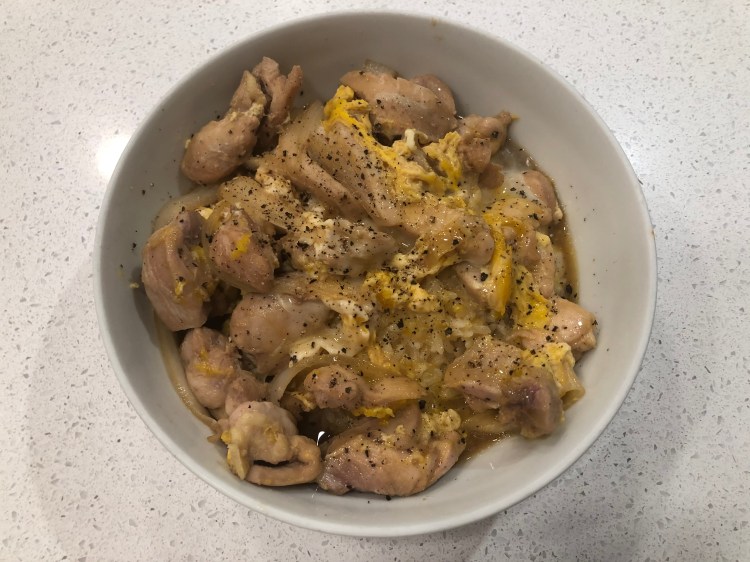




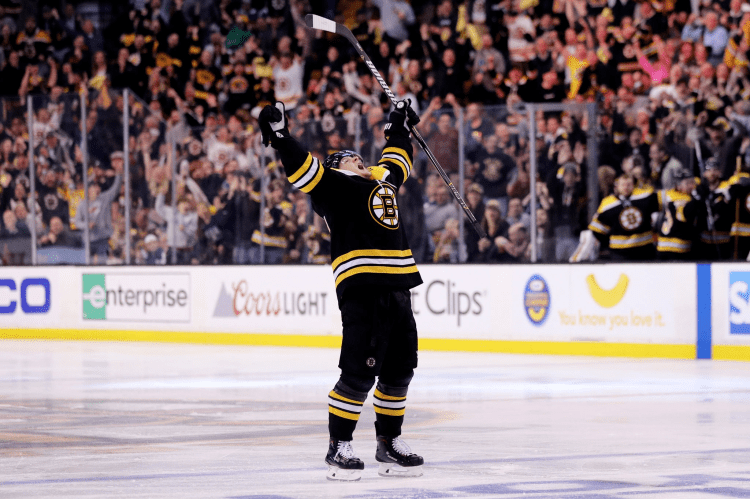

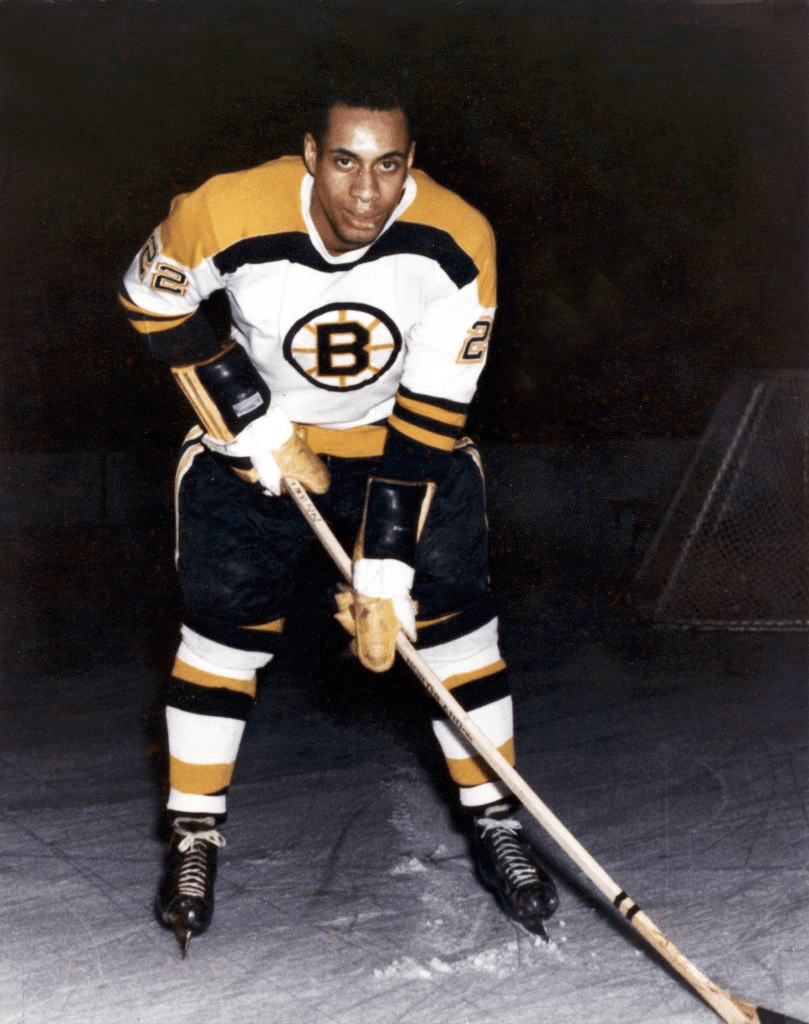
 The Hiro's Blog
